
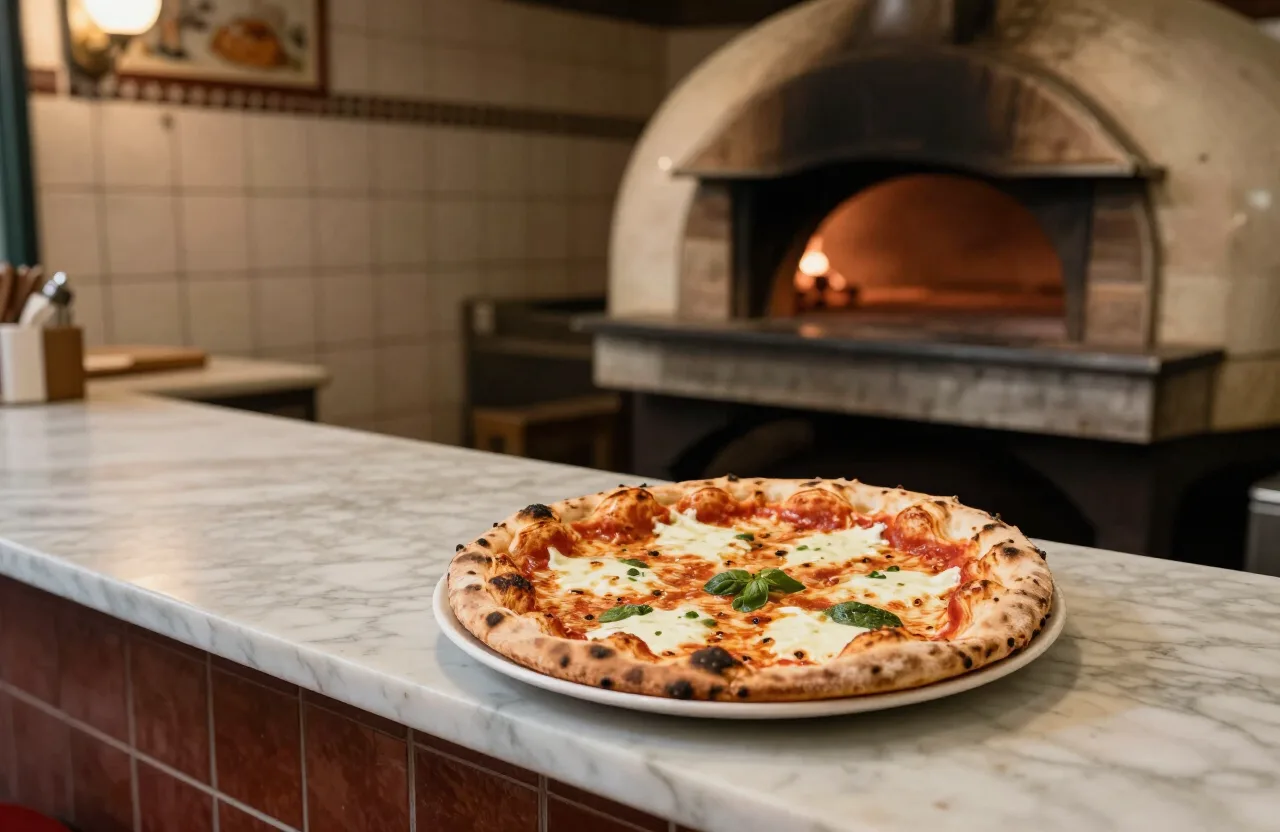
A short history of pizza: where it was invented
Pizza as we know it originated in Naples, Italy, among the working poor who topped cheap flatbreads with tomatoes, cheese, and herbs. Ancient flatbreads existed across the Mediterranean, but the Neapolitan pie is pizza's true ancestor.
The Margherita legend (1889)
The story goes that in 1889, pizzaiolo Raffaele Esposito created a pie for Queen Margherita of Savoy with tomato, mozzarella, and basil to mirror the Italian flag. Whether fully true or embellished, the Margherita name stuck. The Margherita cemented pizza's identity and remains the benchmark by which Neapolitan pizza is judged. Our margherita pizza guide covers the ingredients, the disputed 1889 story and a recipe.
How pizza came to America
Italian immigrants brought pizza to the US in the early 1900s, with Lombardi's in New York (1905) often cited as America's first pizzeria. The first pizzerias opened in cities like New York and New Haven. After World War II, returning soldiers who'd tasted pizza in Italy fueled a national craze, and pizza spread from immigrant neighborhoods into the American mainstream, spawning regional styles from Chicago deep dish to Detroit and beyond.
- 18th-19th c.: pizza develops as Neapolitan street food.
- 1889: the Margherita legend links pizza to Italian identity.
- Early 1900s: first U.S. pizzerias open in New York and New Haven.
- Post-WWII: pizza booms nationwide and regional styles proliferate.
From flatbread to Naples
Flatbreads topped with oil, herbs, and cheese are ancient, eaten across the Mediterranean for millennia. But pizza as we know it - a tomato-topped flatbread - emerged in Naples in the 18th and 19th centuries as cheap, fast street food for the city's working poor. Tomatoes, brought to Europe from the Americas and long viewed with suspicion, became the defining ingredient once Neapolitans embraced them.
Pizza goes global
In the second half of the 20th century, frozen pizza and national delivery chains turned pizza into a worldwide staple, adapting to local tastes everywhere it went. In 2017, UNESCO recognized the art of the Neapolitan pizzaiolo as an intangible cultural heritage - a formal acknowledgment that pizza is not just food but a living craft with deep cultural roots.
The last chapter of pizza history is the one still being written. Frozen pizza arrived in American grocery stores in the 1950s, delivery chains took it national in the 1960s and 1970s, and home ovens built to hit 900°F have brought Neapolitan-style baking into backyards since the late 2010s. Each step changed what people expect a pizza to be, which is why our guide to the regional pizza styles reads like a map of that history.
How regional American styles were born
As pizza spread across the United States, local ingredients, ovens, and immigrant communities gave rise to distinct regional styles. Chicago's deep dish emerged in the 1940s as a heartier, knife-and-fork pie; Detroit style grew out of pizzas baked in automotive-parts pans; New Haven developed its coal-fired apizza; and the Midwest embraced cracker-thin tavern pizza. Each style is a snapshot of a particular place and moment in American food history.
Pizza as cultural heritage
Pizza's journey from Neapolitan street food to global icon reflects broader stories of migration, industrialization, and cultural exchange. UNESCO's 2017 recognition of the Neapolitan pizzaiolo's craft as intangible cultural heritage acknowledged that pizza-making is a living tradition passed down through generations. Today pizza is both deeply local - every region has its version - and universally shared, which is a large part of its enduring appeal.
Pizza's enduring global appeal
From a humble Neapolitan street food to one of the most popular dishes on the planet, pizza's rise is a story of adaptability. Its simple base of dough, sauce, and cheese welcomes endless local reinvention, which is why every region and country has made pizza its own. That combination of a strong core identity and infinite flexibility is what has kept pizza beloved for well over a century, and what continues to drive new styles and fusions today.
Frequently Asked Questions
Who invented pizza?
Modern pizza was developed by the working people of Naples, Italy; the Margherita is credited to pizzaiolo Raffaele Esposito in 1889.
Where was pizza invented?
Pizza as we know it was invented in Naples, Italy, though flatbreads with toppings existed across the ancient Mediterranean.
When was pizza invented?
Neapolitan pizza took shape in the 1700s–1800s, and the famous Margherita dates to 1889.
What was America's first pizzeria?
Lombardi's in New York City, opened in 1905, is widely cited as the first licensed pizzeria in the US.