
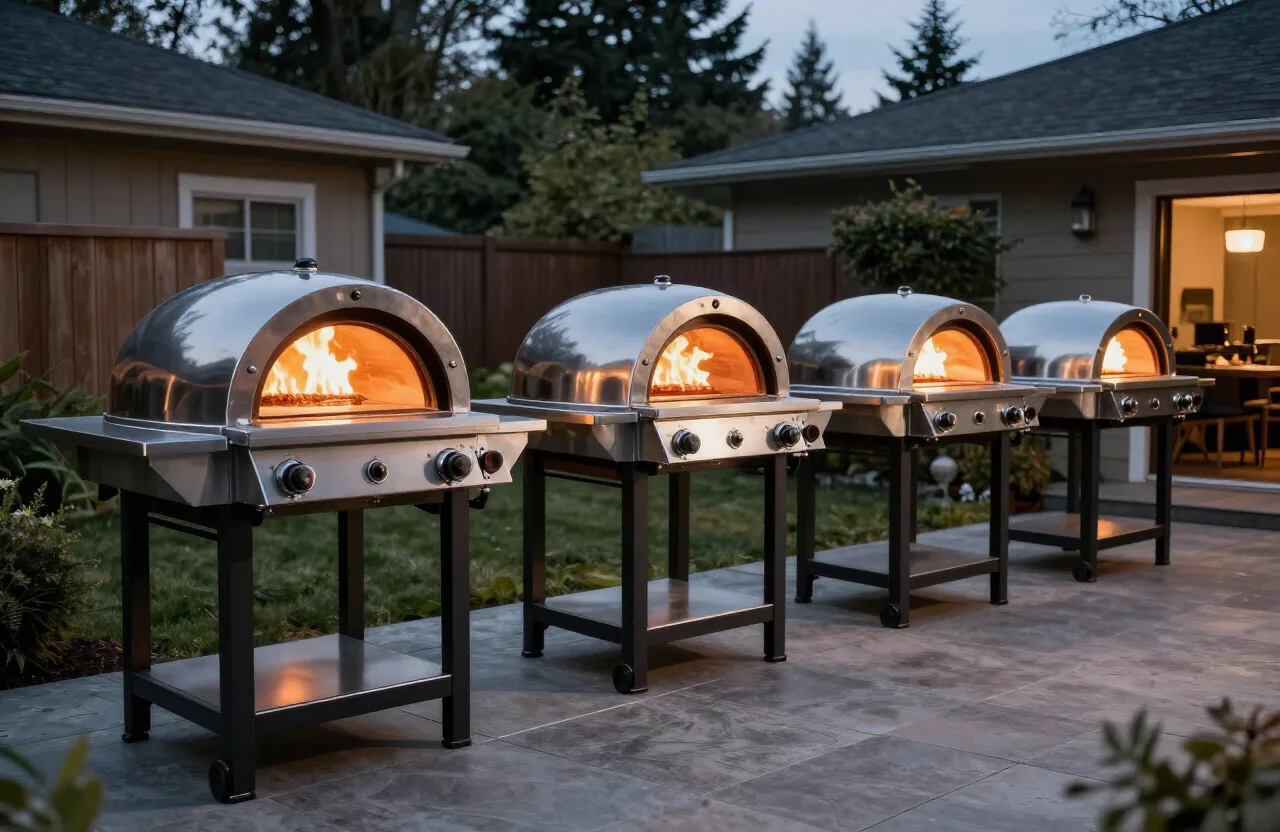
What to look for in a pizza oven
Prioritize peak temperature (aim for 850°F+), fuel type (gas for convenience, wood for flavor), stone size to match your pies, and insulation for heat retention. Prices below were last verified in early 2026 and change often.
Peak temperature, floor recovery, and cooking-surface size are the specs that matter most. A hot floor that recovers quickly between bakes lets you cook pie after pie without waiting; a small floor forces you to work one 12-inch pizza at a time. Insulation and build quality determine how efficiently the oven holds heat and how long it lasts outdoors.
Portability is a real consideration if you'll move the oven for storage or travel, while a larger stationary oven suits a fixed patio setup and bigger gatherings.
Gas vs wood-fired
Gas ovens heat fast and hold a steady temperature — ideal for back-to-back pies. Wood and charcoal add smoky char and the theater of live fire but demand more attention. Multi-fuel models like the Ooni Karu let you switch.
Best outdoor pizza oven: our tested picks
Every oven below is an outdoor pizza oven that reaches at least 850°F, and we ranked them on bake quality first, then heat-up time, fuel flexibility and price. If you want the short answer, the Ooni Karu 16 is the best outdoor pizza oven for most people, the Gozney Roccbox is the best portable pick, and the Gozney Dome is the one to buy if budget is not the constraint. The Ooni vs Gozney comparison goes deeper on those two brands.
Ooni Karu 16
Multi-fuel (wood, charcoal, gas), 16-inch capacity, best all-rounder.
Gozney Dome
Retains heat like a pro deck oven, dual-fuel, premium build.
Ooni Koda 12
Gas-only, fast heat-up, best value entry point.
Gozney Roccbox
Portable, insulated, excellent for its size.
Ninja Woodfire Outdoor
Electric with wood-pellet flavor, versatile beyond pizza.
Prices last verified early 2026 and may change. We may earn a commission from purchases via our partner links.
How pizza ovens are different from your kitchen oven
The single biggest reason restaurant pizza beats home pizza is temperature. A home oven tops out around 550°F; a dedicated pizza oven reaches 750-950°F. That extra heat is what produces a puffy, spotted cornicione in 60-90 seconds instead of a pale, dried-out crust in ten minutes. High heat sets the crust fast, keeps the interior moist, and gives you the leopard-spotting that defines great Neapolitan pizza.
The heat source matters too. Wood and gas both work; gas offers push-button consistency, while wood adds aroma and the theater of live fire. Many modern ovens now run on both.
Gas, wood, or multi-fuel: which to buy
For most home cooks, gas is the practical starting point: it heats in 15-20 minutes, holds a steady temperature, and needs no fire-tending between pies. Wood delivers unmatched flavor and the highest peak temperatures but demands attention and practice. Multi-fuel ovens split the difference, letting you run gas on a weeknight and wood on a weekend.
- Gas: fastest, most consistent, easiest to learn on.
- Wood: best flavor and peak heat, steeper learning curve.
- Multi-fuel: flexibility to switch fuels for the occasion.
- Electric (indoor): apartment-friendly, no open flame, lower peak temps.
Learning to bake in a high-heat oven
High-heat ovens reward practice. Because a pie can cook in 60-90 seconds, the difference between perfect and burnt is measured in ten-second increments. Turn the pizza every 20-30 seconds using a turning peel so it colors evenly, and let the floor fully recover between bakes. Keeping an infrared thermometer on hand takes the guesswork out of reading floor temperature.
Accessories worth buying with your oven
A launching peel (perforated aluminum is easiest for beginners), a smaller turning peel, and an infrared thermometer are the three accessories that most improve results. A dough scraper, proofing boxes, and a good cutting rocker round out a home pizzaiolo's kit. Spend on the peel and thermometer first - they directly affect whether the pizza launches cleanly and bakes evenly.
Indoor pizza ovens and countertop options
Not everyone has an outdoor space for a gas or wood oven. Electric countertop pizza ovens have improved dramatically and can reach 700-800°F on a kitchen counter, making genuine high-heat pizza possible in an apartment. They trade the peak temperature and flavor of live fire for convenience, no open flame, and year-round indoor use, and they're a strong choice for city dwellers.
Budgeting for your first pizza oven
Pizza ovens span a wide price range, and the sweet spot for most beginners is a compact gas model that heats fast and forgives mistakes. Remember to budget beyond the oven itself for fuel, a cover, peels, and a thermometer. Because prices and models change frequently, always confirm current figures with the manufacturer before purchasing rather than relying on a number you saw months ago.
Caring for your oven so it lasts
A little maintenance keeps a pizza oven performing for years. Let it cool fully, brush ash and debris off the stone floor, and keep the oven covered and dry between uses to prevent rust on steel components. Never scrub the cooking stone with soap; burn off residue by running the oven hot instead. Store fuel dry, and check gas connections periodically for a safe, leak-free seal.
Getting consistent results from your oven
The difference between a frustrating pizza oven and a great one is often technique, not the equipment. Preheat fully - most ovens need 20-30 minutes to bring the stone floor up to temperature - and use an infrared thermometer to confirm the floor is hot enough before you launch. Turn the pizza every 20-30 seconds so it colors evenly, and let the floor recover between bakes so the base of each pie crisps properly. With practice, these habits deliver restaurant-quality pizza night after night.
Keep a launching peel well-dusted with flour or semolina, build your pie quickly so the dough doesn't stick, and shake the peel to confirm the pizza moves before you commit to the launch. Small, repeatable routines like these are what separate an occasional lucky pie from consistently excellent pizza.
Frequently Asked Questions
What is the best pizza oven?
For most people the Ooni Karu 16 is the best all-rounder, while the Gozney Dome is the premium pick for heat retention and build quality.
How hot should a pizza oven get?
The best pizza ovens reach 700–950°F, baking a Neapolitan pie in 60–90 seconds.
Is gas or wood-fired better?
Gas is faster and more consistent; wood adds smoky char. Multi-fuel ovens offer both.
Do you need a pizza oven to make great pizza?
No — a pizza steel in a home oven gets excellent results, but a dedicated oven unlocks true Neapolitan char.