
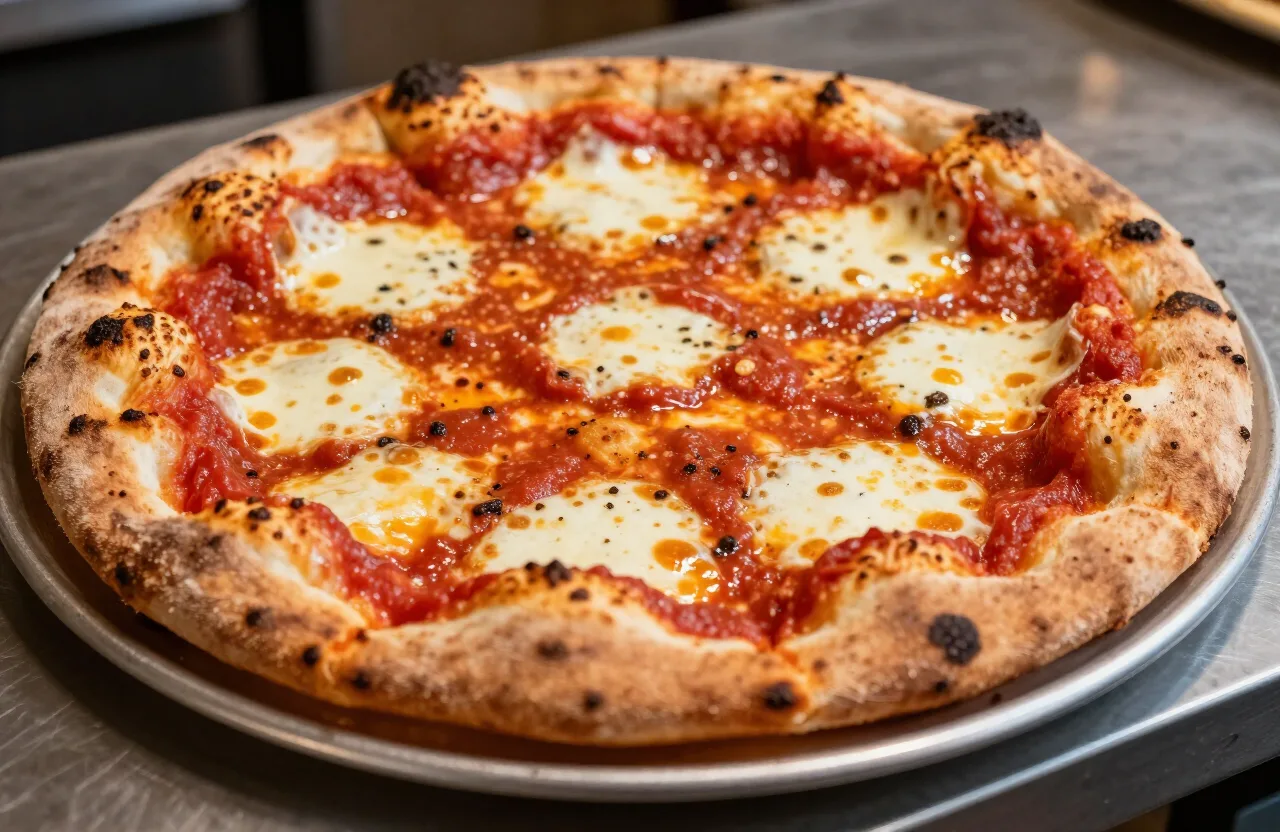
What is Sicilian pizza?
Sicilian pizza (sometimes called square pizza or a Sicilian slice) is baked in an oiled steel pan, giving it a shape closer to focaccia than a round Neapolitan pie. The Sicilian slice you find in New York shops evolved from the traditional sfincione but usually swaps anchovies and breadcrumbs for tomato and mozzarella.
Sicilian pizza dough spec
The dough runs high hydration (around 70%) for an open, airy crumb. It proofs in the pan with plenty of olive oil so the bottom fries as it bakes. Bake at 500°F on a lower rack for maximum lift and browning.
- Hydration: ~70%
- Pan: oiled steel, 12x18 inches
- Bake: 500°F, 18–22 minutes
- Cheese order: low-moisture mozzarella under or over sauce, cook's choice
Sicilian versus grandma pizza
Sicilian and grandma pizza are cousins, both baked in oiled rectangular pans, but they differ in the dough. True Sicilian (sfincione in its Palermo homeland) uses a thick, high-hydration dough given a long proof in the pan for a tall, airy, focaccia-like crumb. Grandma pizza uses a thinner, less-proofed dough pressed into the pan and baked immediately, yielding a denser, crispier base. Both are cut into squares.
The oiled-pan method
The signature of Sicilian pizza is the fried bottom. Generously oil the pan - olive oil is traditional - so the dough essentially shallow-fries against the hot metal, creating a crisp, golden, almost crackly base beneath the pillowy interior. Let the dough proof directly in the oiled pan until it fills the corners and looks bubbly before it goes into the oven.
- Use a well-oiled rectangular or square metal pan.
- Proof the dough in the pan until it reaches the edges.
- Bake at 450-500°F until the base is deep golden and crisp.
- Cut into squares and finish with grated hard cheese or herbs.
Building the flavor
Classic sfincione is topped with a robust cooked tomato-and-onion sauce, sometimes anchovy, breadcrumbs, and a firm sheep's-milk cheese like caciocavallo rather than mozzarella. Americanized Sicilian leans on tomato sauce and mozzarella, often with the sauce ladled over the cheese so it doesn't burn during the longer bake. Either way, the thick crust wants a bold, well-seasoned topping to match.
Getting the crumb right
The tall, open crumb comes from high hydration (around 70-75%) and a patient proof. Give the dough a long, cool bulk ferment for flavor, then a full final proof in the pan so it's light and jiggly before baking. Rushing the proof produces a dense, bready square instead of the airy, custardy interior that defines a great Sicilian slice.
Common Sicilian pizza mistakes
Two mistakes sink most homemade Sicilian pies: skimping on oil and rushing the proof. Without enough oil in the pan, the base won't develop its signature fried crispness and can stick. Without a full final proof in the pan, the crumb comes out dense and bready instead of tall and airy. Give the dough time to relax and fill the pan, and don't be shy with the olive oil.
Serving and reheating Sicilian slices
Thick Sicilian squares reheat best low and slow so the interior warms before the top scorches - try 325-350°F for 12-15 minutes, tented with foil at first, then uncovered to re-crisp the base. Because of their sturdy structure, Sicilian slices also travel and keep well, making them a great choice for packed lunches and parties where pizza needs to hold up over time.
Why Sicilian is beginner-friendly
Sicilian pizza is one of the most forgiving styles for new bakers because the pan does so much of the work. There's no delicate launch off a peel, no razor-thin stretch to master, and the high-hydration dough is spread rather than tossed. The oiled pan crisps the base for you, and the thick crust tolerates a longer, more moderate bake. If you're intimidated by round pizzas, a Sicilian tray is a confidence-building place to start.
Sicilian Pizza
Yield: One 12x18-inch pan (8 squares)
Ingredients
- •500g bread flour
- •350g water (70% hydration)
- •10g salt
- •3g instant yeast
- •40g olive oil (for the pan)
- •250g crushed tomatoes
- •300g low-moisture mozzarella
Method
- 1Mix flour, water, salt, and yeast into a shaggy dough. Rest 30 minutes, then fold 3 times over an hour.
- 2Cold-ferment in the fridge 24 hours.
- 3Oil the pan generously, press the dough to the edges, and proof 2 hours until puffy.
- 4Top with mozzarella and dollops of crushed tomato.
- 5Bake at 500°F on the lower rack for 18–22 minutes until the bottom is crisp and golden.
Frequently Asked Questions
What is Sicilian pizza?
Sicilian pizza is a thick, rectangular, pan-baked pie with an airy crumb and a crispy fried bottom, rooted in Palermo's sfincione.
What's the difference between Sicilian and regular pizza?
Sicilian pizza is thick and baked in an oiled pan, while classic Neapolitan or New York pizza is thin and stretched round.
Why is Sicilian pizza square?
It bakes in a rectangular steel pan, a tradition carried from Sicilian sfincione and Italian bakery focaccia.
Is Sicilian pizza the same as Grandma pizza?
They're close cousins, but Grandma pizza is thinner and proofs for less time, giving a denser, crispier base.