The best pizza toppings, ranked by popularity
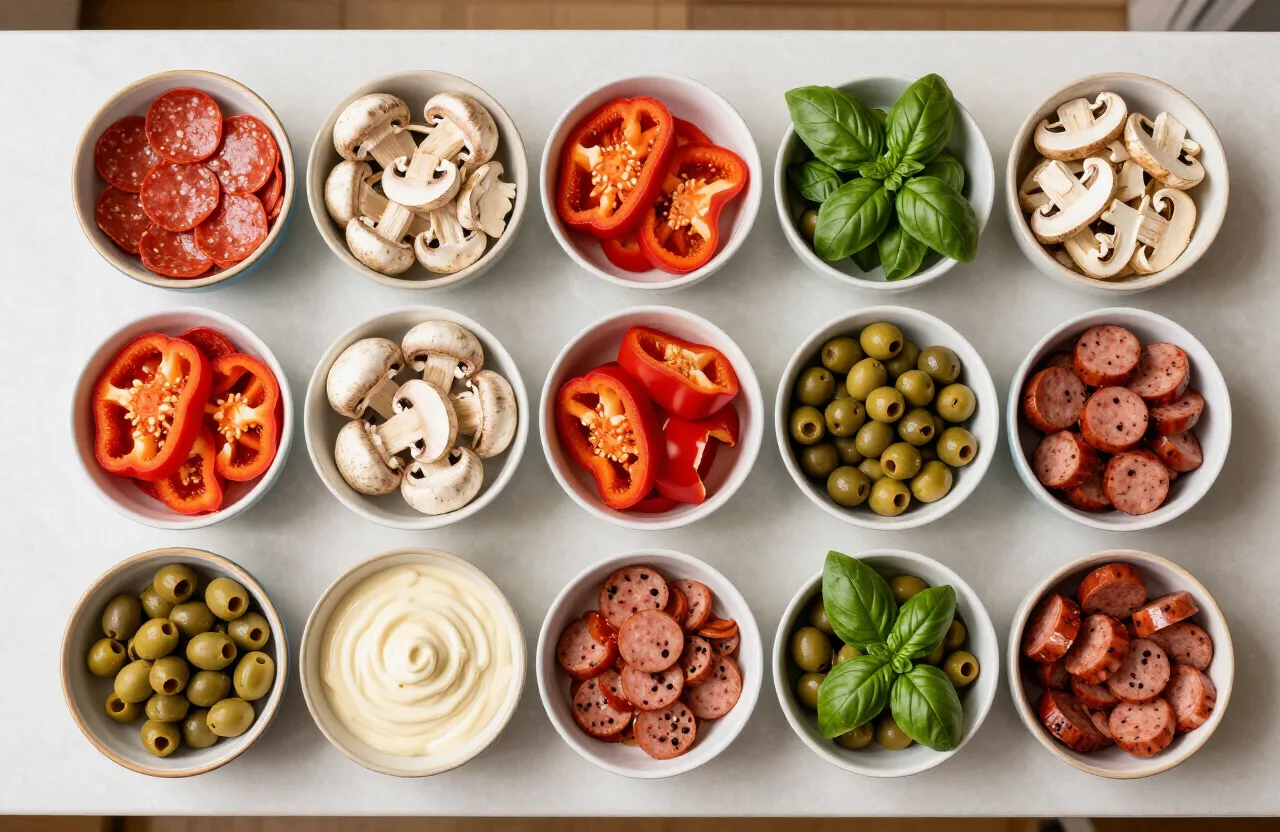
Pepperoni is America's number-one topping, followed by mushrooms, onions, sausage, and extra cheese. Each brings a different role: pepperoni adds fat and spice, mushrooms add umami, onions add sweetness.
- Pepperoni — salty, spicy, renders fat as it cooks
- Mushroom — earthy umami; pre-cook to remove water
- Sausage — savory and rich; crumble raw so it cooks in
- Fresh basil — add after baking to keep it bright
What's on a supreme pizza?
A supreme pizza loads on pepperoni, sausage, bell peppers, onions, mushrooms, and black olives — a bit of everything. It's the classic 'the works' order.
For a familiar all-in-one combination, build a supreme pizza with pepperoni, sausage, vegetables, and olives.
What's on a meat lovers pizza?
A meat lovers pizza stacks pepperoni, sausage, bacon, ham, and sometimes ground beef. Because meats render fat, go lighter on cheese to avoid a greasy pie.
Topping pairing rules
Balance rich with bright (sausage + peppers), pre-cook watery toppings (mushrooms, fresh tomato), and don't overload — more than 3–4 toppings steams the crust soggy.
For a sweet-and-spicy modern combination, our hot honey pizza guide pairs chili warmth with a finishing drizzle.
The order of operations
Great topping is as much about sequence as selection. The classic order - sauce, then cheese, then toppings - protects delicate ingredients and keeps the cheese from sliding off. But some styles invert this: Chicago deep dish layers cheese under the sauce to keep it from burning during the long bake, and many pizzerias add fresh basil or arugula only after the pizza comes out so the leaves stay bright.
Managing moisture
The most common home-pizza mistake is overloading wet toppings. Fresh mozzarella, sliced tomatoes, mushrooms, and raw onions all release water as they bake, and too much of it turns the center gummy. Pre-cook watery vegetables, pat fresh mozzarella dry, and use a restrained hand - a thin, even scatter beats a heavy pile every time.
- Sauté or roast mushrooms, peppers, and onions before topping.
- Pat fresh mozzarella and sliced tomatoes dry with paper towels.
- Salt and drain eggplant or zucchini before it goes on the pie.
- Add fresh herbs and greens after baking, not before.
Balancing flavor, fat, and acid
A memorable pizza balances richness with brightness. Fatty toppings like sausage, pepperoni, and extra cheese need a counterweight - a swipe of acidic tomato sauce, a scatter of pickled chilies, or a finish of lemon or hot honey. Think in terms of contrast: something salty, something sweet, something sharp, and something fresh usually makes a more interesting pie than three kinds of meat.
How much topping is too much
A useful rule: you should still see gaps of cheese and sauce between toppings after baking. Overloading insulates the crust, prevents proper browning, and steams the base. Two or three well-chosen toppings almost always outperform a loaded 'everything' pie, especially in a fast, high-heat bake where excess moisture has no time to cook off.
Pizza topping ideas: classic combinations that work
When in doubt, lean on time-tested pairings. Margherita (tomato, fresh mozzarella, basil) is the benchmark for a reason. Pepperoni with a touch of hot honey balances spice and sweetness; mushroom with caramelized onion and fontina is rich and earthy; and a simple marinara with garlic and oregano lets a great crust shine. Master a few classics before inventing your own combinations.
Two combinations divide people more than any other. Anchovies on pizza are the classic salty counterpoint to tomato and mozzarella, and our anchovy guide explains how to use them so they season the pie instead of dominating it. Pineapple is the other, and the rule is the same as for any wet topping: drain it, cut it small, and pair it with something salty and cured.
Pre-cooking and prepping toppings
Because a pizza bakes fast and hot, toppings that need real cooking should be prepped first. Raw sausage should be crumbled and browned, bacon rendered, and dense vegetables like broccoli or potato parboiled. Anything that only needs to warm through - cured meats, pre-cooked vegetables, fresh herbs - can go on raw. Matching each topping's prep to the short bake time is the difference between evenly cooked and half-raw.
Finishing touches that elevate any pizza
The last thirty seconds of assembly often matter most. A drizzle of good olive oil, a scatter of fresh basil or arugula, a shower of grated Parmesan, a swirl of hot honey, or a few flakes of chili added after the bake bring brightness and aroma that survive the oven's heat. These finishing touches cost almost nothing and instantly lift a simple cheese or pepperoni pizza from ordinary to memorable, so keep a few on hand for every pizza night.
Frequently Asked Questions
What is the most popular pizza topping?
Pepperoni is the most popular pizza topping in the US, followed by mushrooms, onions, and sausage.
What is on a supreme pizza?
A supreme pizza typically has pepperoni, sausage, bell peppers, onions, mushrooms, and black olives.
What toppings should you pre-cook?
Pre-cook watery or raw toppings like mushrooms, fresh tomatoes, and some vegetables so they don't make the pizza soggy.
How many toppings is too many?
More than three or four toppings can steam the crust and make it soggy — balance and restraint beat overloading.