
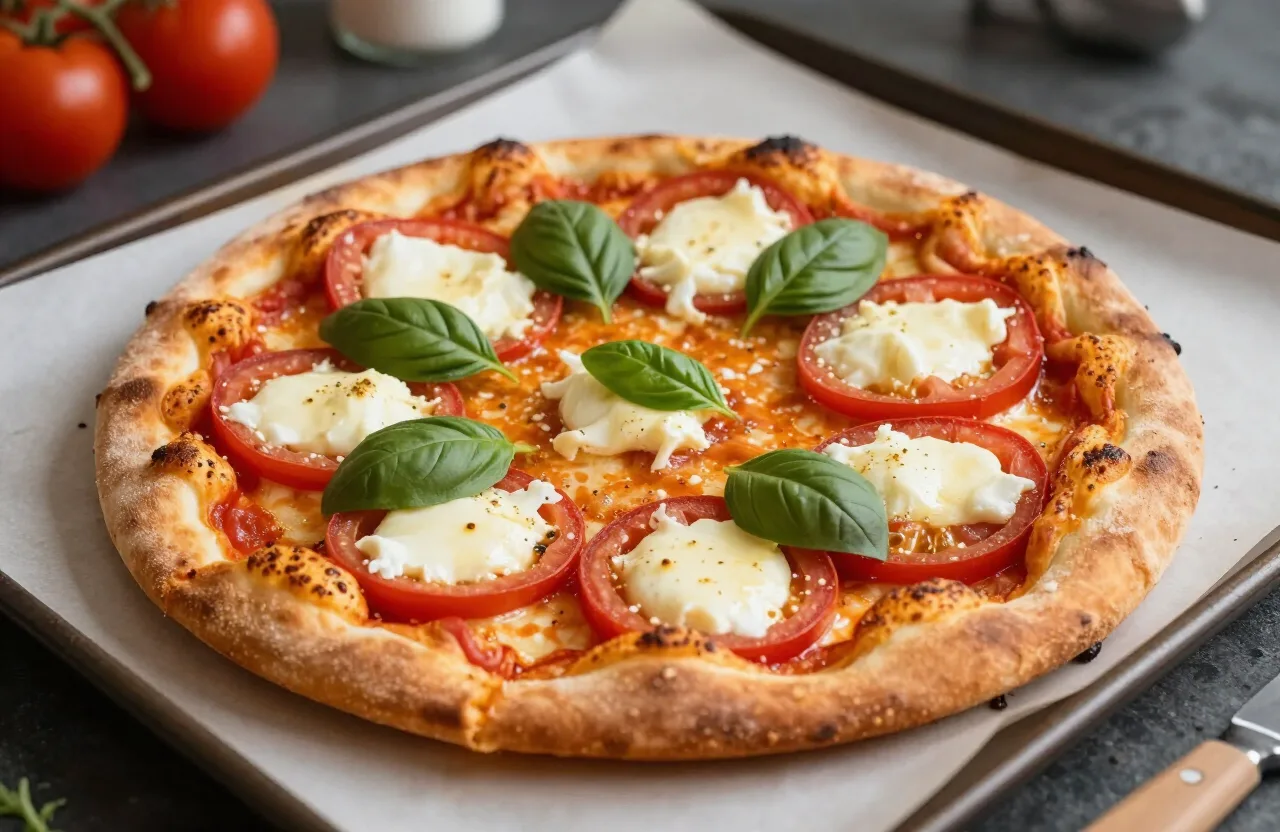
Best gluten free pizza chains
Not all GF crusts are celiac-safe due to shared ovens. Blaze Pizza and some Mellow Mushroom and Pizza Hut locations follow stricter protocols; always confirm cross-contamination practices before ordering if you have celiac disease.
Best gluten free frozen pizza
Caulipower and Against the Grain rank among the best GF frozen pizzas for crust texture and browning.
Why gluten-free dough behaves differently
Gluten is the protein network that gives wheat dough its stretch and chew, so removing it changes everything. Gluten-free doughs can't be tossed or stretched the same way; they're softer, wetter, and more batter-like, and they rely on binders like xanthan gum or psyllium husk to hold together. Understanding that you're working with a different material - not just a wheat dough with the wheat swapped out - is the key to good results.
Flours and blends that work
No single gluten-free flour mimics wheat, so blends win. Rice flour provides neutral structure, tapioca and potato starch add chew and browning, and a binder ties it together. Almond and cauliflower crusts are popular grain-free alternatives with their own textures. Many cooks find a good commercial 1:1 gluten-free flour blend the most reliable starting point.
- Rice-flour-based blends: closest to a classic crust texture.
- Xanthan gum or psyllium: essential binders for structure.
- Almond flour: rich, tender, grain-free option.
- Cauliflower crust: low-carb, distinct flavor, needs a dry base.
Avoiding cross-contamination
For people with celiac disease, gluten-free means truly gluten-free - which requires avoiding cross-contact. Use a dedicated peel or a clean sheet of parchment, don't share a floured surface with wheat dough, and be cautious with pizzeria pies unless the kitchen has a separate prep area. A crust made from gluten-free flour is only safe if it hasn't touched wheat along the way.
Baking gluten-free pizza well
Because gluten-free doughs are wetter, par-baking the crust before topping is often the difference between crisp and gummy. Bake the bare crust on a hot steel or stone until set, then add sauce, cheese, and toppings and finish. This two-stage bake drives off moisture and gives the base a chance to firm up before the wet toppings go on.
Store-bought versus homemade gluten-free crust
Both routes have merit. Quality pre-made gluten-free crusts and frozen gluten-free pizzas have improved and offer convenience and consistency, which is valuable given how finicky the doughs can be. Making your own with a good 1:1 blend gives you control over thickness and flavor and often a better result, but expect a learning curve. Trying a couple of reputable store-bought options is a low-risk way to find a texture you like.
Naturally gluten-free crust alternatives
Beyond flour blends, several whole-food bases are naturally gluten-free. Cauliflower crust is popular and low in carbs but needs to be squeezed very dry to avoid sogginess. Almond-flour and chickpea-flour crusts are hearty and grain-free, and even a thick portobello mushroom cap can stand in as a low-carb base. Each has its own flavor and texture, so it's worth experimenting to find your favorite.
Getting the best texture from gluten-free dough
Because gluten-free doughs lack the protein network that traps gas, they benefit from a few specific techniques. Par-baking the bare crust before topping firms up the base and prevents a gummy center, a binder like xanthan gum or psyllium adds needed structure, and baking on a hot steel or stone drives off moisture for a crisper result. Keep toppings on the lighter, drier side so the more fragile crust doesn't turn soggy under the load.
For the long version, our gluten-free pizza crust recipe post gives two methods, a quick batter crust and a psyllium dough you can shape by hand, with gram weights and a troubleshooting table for gummy, cracked or crumbly crusts.
Gluten free pizza crust recipe
This gluten free pizza dough recipe uses a rice-flour and tapioca blend with psyllium for structure, which is why it stretches a little, browns properly, and holds a slice without cracking. It is written in gram weights so you can scale it in the dough calculator, and it works on a steel, a stone, or a sheet pan.
Yield: One 12-inch crust
Ingredients
- •180g gluten free flour blend (rice + tapioca)
- •8g psyllium husk
- •200g warm water
- •4g instant yeast
- •5g salt
- •10g olive oil
Method
- 1Whisk psyllium into the warm water and let it gel for 5 minutes.
- 2Combine flour, yeast, and salt, then mix in the gel and oil until a smooth dough forms.
- 3Rest 30 minutes, then press onto parchment into a 12-inch round.
- 4Par-bake at 450°F for 8 minutes, add toppings, and bake 7 more until browned.
Make-ahead and freezing
Gluten free pizza crust freezes better than wheat dough. Par-bake the bare crusts for 8 minutes, cool them completely, and freeze them flat with parchment between layers. Top and bake straight from frozen, adding 2 to 3 minutes. Unbaked dough can be refrigerated for up to 48 hours in a covered container; let it sit at room temperature for 30 minutes before pressing it out.
Frequently Asked Questions
Is gluten free pizza safe for celiacs?
Only if it's prepared without cross-contamination. Some chains use dedicated protocols, but always confirm before ordering if you have celiac disease.
What is gluten free pizza crust made of?
Typically a blend of rice flour, tapioca starch, and psyllium or xanthan gum for structure.
What is the best gluten free frozen pizza?
Caulipower and Against the Grain are top-rated for crust texture and browning.
Does gluten free pizza have fewer calories?
Not necessarily — GF crusts can have similar or more calories, though cauliflower crusts are often lighter.