
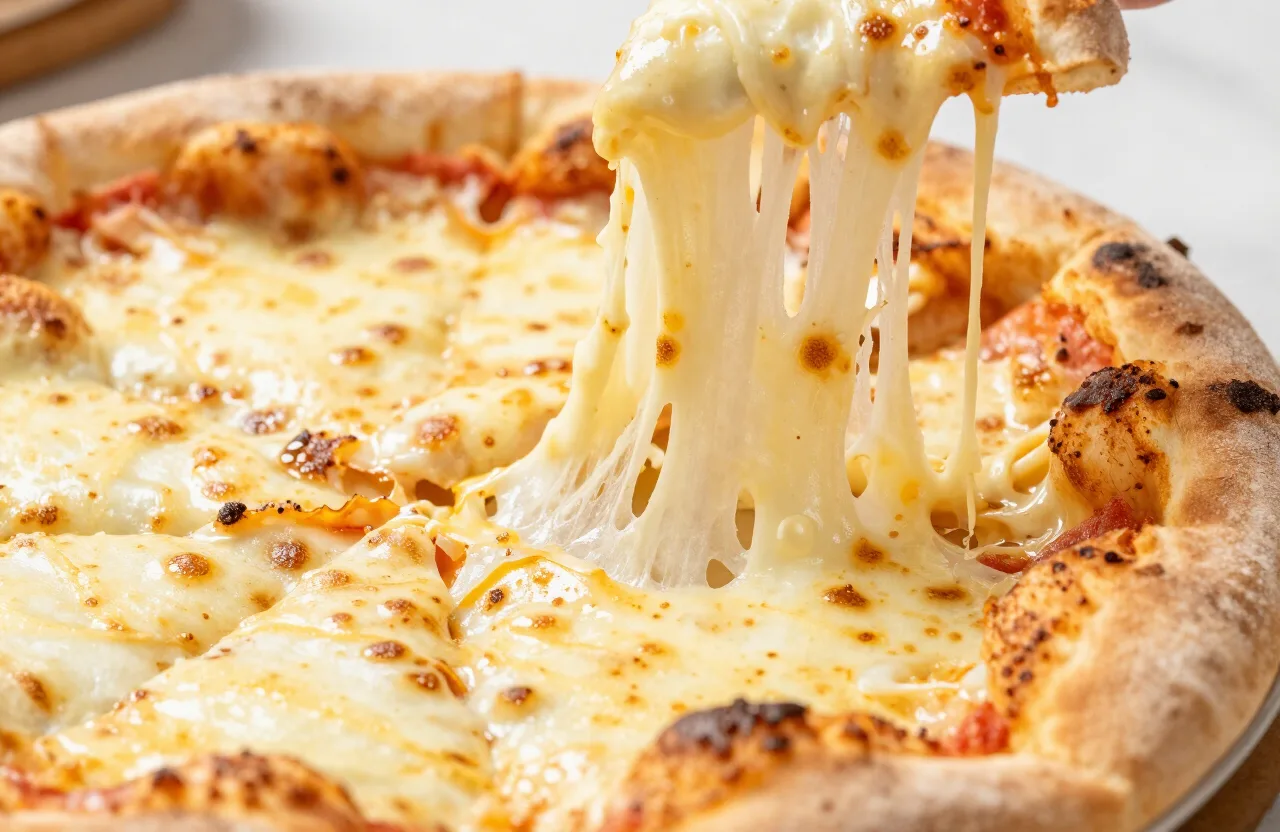
Why low-moisture mozzarella wins
Low-moisture mozzarella has less water than fresh mozzarella, so it browns instead of weeping and won't flood the pie. It's the standard for New York and most American styles.
Best pizza cheese blends by style
Fresh mozzarella (fior di latte) suits Neapolitan; a mozzarella-provolone blend adds tang for pan pizzas; brick cheese is essential for Detroit-style; and a touch of grated pecorino or parmesan boosts savory depth on almost any pie.
- Neapolitan: fresh mozzarella (fior di latte)
- New York: low-moisture whole-milk mozzarella
- Detroit: brick cheese to the edges
- Flavor boost: pecorino or parmesan finish
Vegan pizza cheese
Cashew- and coconut-oil-based cheeses from brands like Miyoko's and Violife now melt and stretch far better than early versions — the best vegan options actually brown.
Why low-moisture mozzarella rules
Low-moisture mozzarella is the workhorse of American pizza for good reason: it melts into a smooth, elastic blanket, browns without weeping, and has enough fat to carry flavor without drowning the pie. Fresh mozzarella tastes cleaner and more delicate but holds far more water, so it's best torn into pieces and patted dry, or reserved for high-heat Neapolitan bakes where the short cook time works in its favor.
Building a cheese blend
Many great pizzerias blend cheeses rather than relying on one. A base of low-moisture mozzarella provides the stretch; small additions of provolone add tang, aged Parmesan or Pecorino bring salty depth, and a little fontina or white cheddar boost richness and browning. Detroit-style famously uses brick cheese pushed to the edges to form its signature caramelized frico crust.
- Low-moisture mozzarella: the stretchy, reliable base.
- Provolone: adds tang and improves browning.
- Parmesan / Pecorino: salty, umami finishing cheeses.
- Brick cheese: essential for Detroit-style frico edges.
Shred it yourself
Pre-shredded cheese is coated with anti-caking agents like cellulose and potato starch that keep the strands separate but interfere with a smooth melt. Buying blocks and shredding your own gives you a glossier, more even melt and better flavor. Shred cold cheese for cleaner strands, and let it come up slightly toward room temperature before it goes on the pie.
How much cheese per pizza
For a 12-inch pizza, three to four ounces of shredded cheese is plenty; a 14-inch pie wants five to six. More than that and the cheese pools, releases oil, and prevents the sauce underneath from setting. Distribute it evenly to the edge of the sauce, leaving the cornicione bare so the crust can puff and char.
Finishing cheeses and when to add them
Some cheeses belong on the pizza before baking; others are best added after. Hard grating cheeses like Parmesan and Pecorino can be scattered on before the bake for a salty, browned crust, or showered over the hot pizza as a finishing touch. Delicate fresh cheeses like burrata or dollops of ricotta are best added after baking or in the final minute so they stay creamy rather than seizing up.
Dairy-free and lower-fat options
Plant-based mozzarella alternatives have improved and now melt and stretch far better than early versions, making a convincing dairy-free pizza achievable. For a lighter pie, part-skim mozzarella cuts fat while keeping good melt, and using a little less cheese overall lets the sauce and toppings carry more of the flavor. Whatever you choose, shred or tear it evenly so it melts uniformly across the pie.
Putting your cheese choices together
For most home cooks, a base of freshly shredded low-moisture mozzarella is the reliable foundation, with small additions of provolone for tang and Parmesan or Pecorino for salty depth. Reserve fresh mozzarella for high-heat bakes where its moisture works in your favor, and match specialty cheeses to the style - brick for Detroit, a blend for New York. Shred your own from blocks, use a restrained amount, and distribute it evenly to the edge of the sauce for the best melt and browning.
Frequently Asked Questions
What is the best cheese for pizza?
Low-moisture whole-milk mozzarella is the best all-purpose pizza cheese for melt, browning, and stretch.
What cheese blend do pizzerias use?
Many blend low-moisture mozzarella with provolone for tang, and finish with grated pecorino or parmesan.
Can you use fresh mozzarella on pizza?
Yes, especially for Neapolitan — but drain it well, as its high moisture can make other styles soggy.
What is the best vegan pizza cheese?
Cashew- and coconut-based options from Miyoko's and Violife melt and brown the best.