
Pepperoni Pizza: Why Some Pepperoni Curls, Which to Buy, and the Recipe
America's favorite pizza, taken seriously: why some pepperoni curls into crisp cups and some lies flat, which to buy, how much to use, and a New York-style pepperoni pizza recipe.
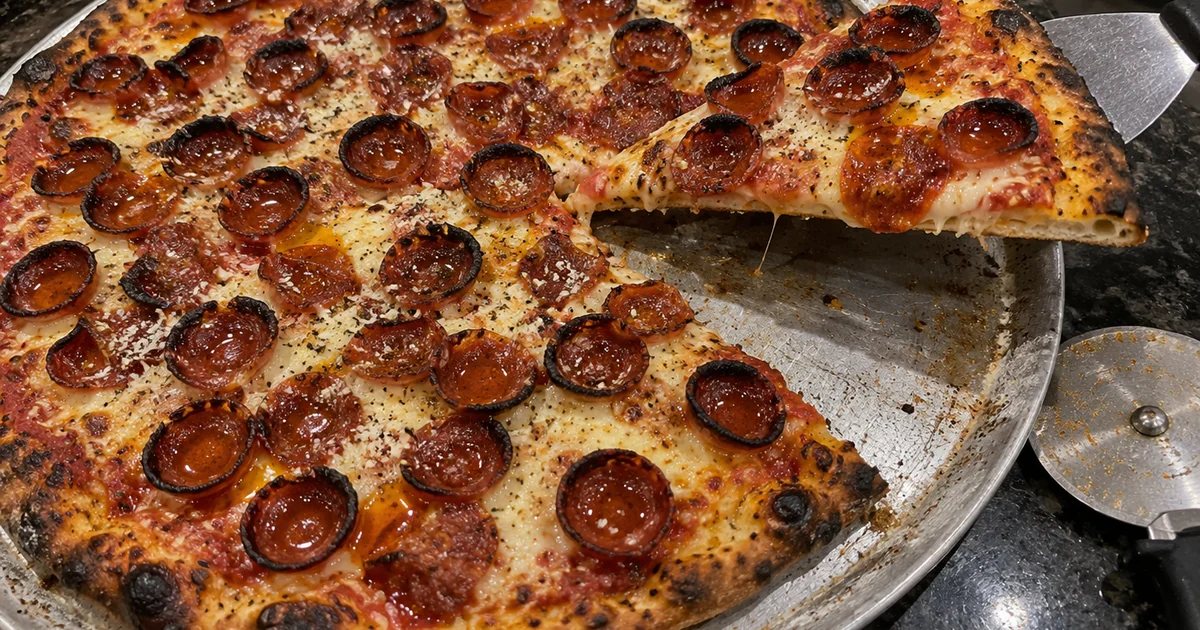
Pepperoni pizza is the most popular pizza in America, and the pepperoni itself is American: a cured pork and beef sausage seasoned with paprika and cayenne that Italian immigrants invented here. The difference between flat, greasy discs and crisp cups with charred edges comes down to which pepperoni you buy and how thick it is sliced.
What pepperoni is and where it came from
Pepperoni is a fine-grained, air-dried salami, usually pork and beef, colored and flavored with paprika and heated with cayenne or chili. It is not an Italian product. In Italy, peperoni means bell peppers, and asking for it on a pizza there gets you vegetables. The sausage took shape in Italian-American butcher shops in the early 1900s; the trade magazine PMQ traces the earliest print references to 1908 and 1919, the first known menu evidence of pepperoni on a pizza to 1950 in New Haven, Connecticut, and its climb to the top topping to the chains of the 1960s and 1970s, because it was cheap, salty and easy to ship.
Cup-and-char vs flat: why some pepperoni curls
Pizzerias call the small slices that curl into crisp little bowls "cup and char" or "roni cups." The curl happens because the top of the slice, facing the oven's heat, dries and shrinks faster than the underside sitting in cheese. Food writer J. Kenji López-Alt tested the variables for Serious Eats, and Food Republic's summary of that research comes down to three things: the casing, the slice thickness and how the meat is packed. Pepperoni stuffed into natural or collagen casings is denser and cups readily; the wide, pre-sliced sandwich pepperoni sold in fibrous casings mostly stays flat. Slices need some thickness to curl, roughly a tenth of an inch, and slices cut too thin or too thick both lie flat. Smaller-diameter sticks, around an inch and a half across, make tidier cups than the big sandwich logs.
The cups also solve the grease problem. The rendered fat pools inside each cup instead of running across the cheese, and the thin rim crisps and chars. A flat slice spreads its fat over the whole pizza.
Which pepperoni to buy
| Type | Where it is sold | Cups? | Flavor | Notes |
|---|---|---|---|---|
| Pre-sliced sandwich pepperoni (large, flat) | Every supermarket deli case | No | Mild, salty | Fine under the cheese; too thin and too wide to cup |
| Retail cupping pepperoni | Supermarket, since 2020 | Yes | Medium | Hormel launched a pre-sliced cupping pepperoni in March 2020, the first in grocery stores; other brands followed |
| Natural-casing stick ("old world") | Italian delis, online, some supermarkets | Yes, the best | Tangy, more fermented | Slice it yourself a tenth of an inch thick; Ezzo of Columbus, Ohio is the pizzeria benchmark |
| Turkey pepperoni | Supermarket | Rarely | Lean, mild | Dries out; add under the cheese or in the last 2 minutes |
| Plant-based pepperoni | Supermarket, natural foods | Some brands | Smoky, paprika-forward | Crisps well; see our vegan pizza guide |
How much pepperoni, and where it goes
For a 12-inch pizza, 40 to 50 grams is enough: about 20 of the large sandwich slices or 30 to 35 small cups. Pizzerias overlap cups on purpose, since they shrink as they cook. Flat pepperoni goes under the cheese if you want it soft and protected, on top if you want the edges to crisp. Cupping pepperoni always goes on top, where the heat can reach it. A dusting of grated pecorino over the pepperoni before it bakes picks up the rendered fat and browns. Our pizza toppings guide covers the order of operations for everything else.
Pepperoni pizza recipe
One 12-inch New York-style pepperoni pizza.
- 280g dough ball at room temperature (see our pizza dough recipes; the New York dough is the one for this)
- 90g pizza sauce: crushed tomatoes, salt, a pinch of oregano
- 170g low-moisture whole-milk mozzarella, shredded
- 45g pepperoni: 30 to 35 cupping slices, or 20 flat slices
- 10g grated pecorino romano (optional)
- Put a steel or stone on an upper-middle rack and heat the oven to its maximum, 500 to 550°F, for 45 minutes. Pepperoni crisps best with heat from above as well as below, so a higher rack beats the lowest one here.
- Stretch the dough to 12 inches on a semolina-dusted peel or on parchment.
- Spread the sauce thinly to a half inch from the edge. Scatter the mozzarella evenly, right to the edge of the sauce.
- Lay the pepperoni on top. Overlap the cups slightly; space flat slices out. Dust with pecorino.
- Bake 7 to 9 minutes, until the cups are curled and charred at the rims and the cheese is spotted brown. If the cheese is done and the pepperoni is not, 30 to 60 seconds under the broiler finishes it.
- Rest two minutes before cutting so the fat settles into the cups rather than sliding off the slice.
The right cheese matters as much as the pepperoni. Low-moisture whole-milk mozzarella browns without pooling water; our best cheese for pizza guide explains the blends.
Dealing with the grease
Pepperoni is roughly 40 to 45 percent fat, and most of it renders. Cupping pepperoni traps most of it in the cups. With flat slices, use fewer of them, put them on top so the fat crisps rather than soaks into the cheese, and blot the surface once with a paper towel if you must. Baking the pepperoni on a sheet pan for 3 minutes before it goes on the pizza renders some fat in advance and gives you crisp edges without the pool.
Pepperoni pizza calories
A slice of pepperoni pizza from a 14-inch regular-crust pie runs about 290 to 330 calories, compared with 250 to 290 for plain cheese, because the pepperoni adds 40 to 80 calories a slice in fat and protein. Thin crust drops the count; deep dish and stuffed crust push it past 400. Our pizza calories guide has the full chart by style and topping.
Variations worth making
- Hot honey pepperoni. A drizzle of chili-infused honey after the bake; the sweet heat against salty, crisp pepperoni is why it took over menus. Our hot honey pizza guide has the pairings and a homemade hot honey.
- Tavern-style. Cracker-thin crust, pepperoni under and over the cheese, cut in squares. See tavern style pizza.
- Pepperoni and pickled jalapeño. Acid and heat cut the fat. Drain the jalapeños well.
- Double pepperoni. Flat slices under the cheese for flavor, cups on top for crunch. The pizzeria trick for "extra pepperoni" that does not turn greasy.
- Pepperoni with ricotta. Dollops of ricotta between the cups, cracked black pepper, basil after the bake.
Leftovers keep three to four days in the fridge. The pepperoni goes limp as it cools, so reheat the slice in a skillet with a lid, which re-crisps the cups and the base at the same time.
Frequently asked questions
What is pepperoni made of?
Pepperoni is a cured, air-dried sausage, usually a mix of pork and beef, seasoned with paprika, cayenne or chili, garlic and salt. It is an American creation from Italian-American butcher shops in the early 1900s, not a traditional Italian product.
Why does some pepperoni curl up on pizza?
The top of the slice dries and shrinks in the oven's heat while the underside stays soft in the cheese. Pepperoni stuffed in natural or collagen casings and sliced about a tenth of an inch thick curls into cups; thin, wide sandwich pepperoni in fibrous casing stays flat.
Does pepperoni go on top of or under the cheese?
Cupping pepperoni goes on top so the heat can curl and crisp it. Flat pepperoni can go under the cheese for a softer, protected slice, or on top for crisp edges. Many pizzerias do both.
How much pepperoni goes on a pizza?
About 40 to 50 grams for a 12-inch pizza: roughly 20 large flat slices or 30 to 35 small cups. Cups shrink as they cook, so overlap them slightly.
How many calories are in a slice of pepperoni pizza?
Around 290 to 330 calories for a slice of a 14-inch regular-crust pie, about 40 to 80 more than a plain cheese slice. Thin crust is lower; deep dish and stuffed crust are higher.
Is pepperoni pizza Italian?
No. Pepperoni was developed in the United States by Italian immigrants, and the first known evidence of it on a pizza is a 1950 menu in New Haven, Connecticut. In Italy, peperoni means bell peppers.