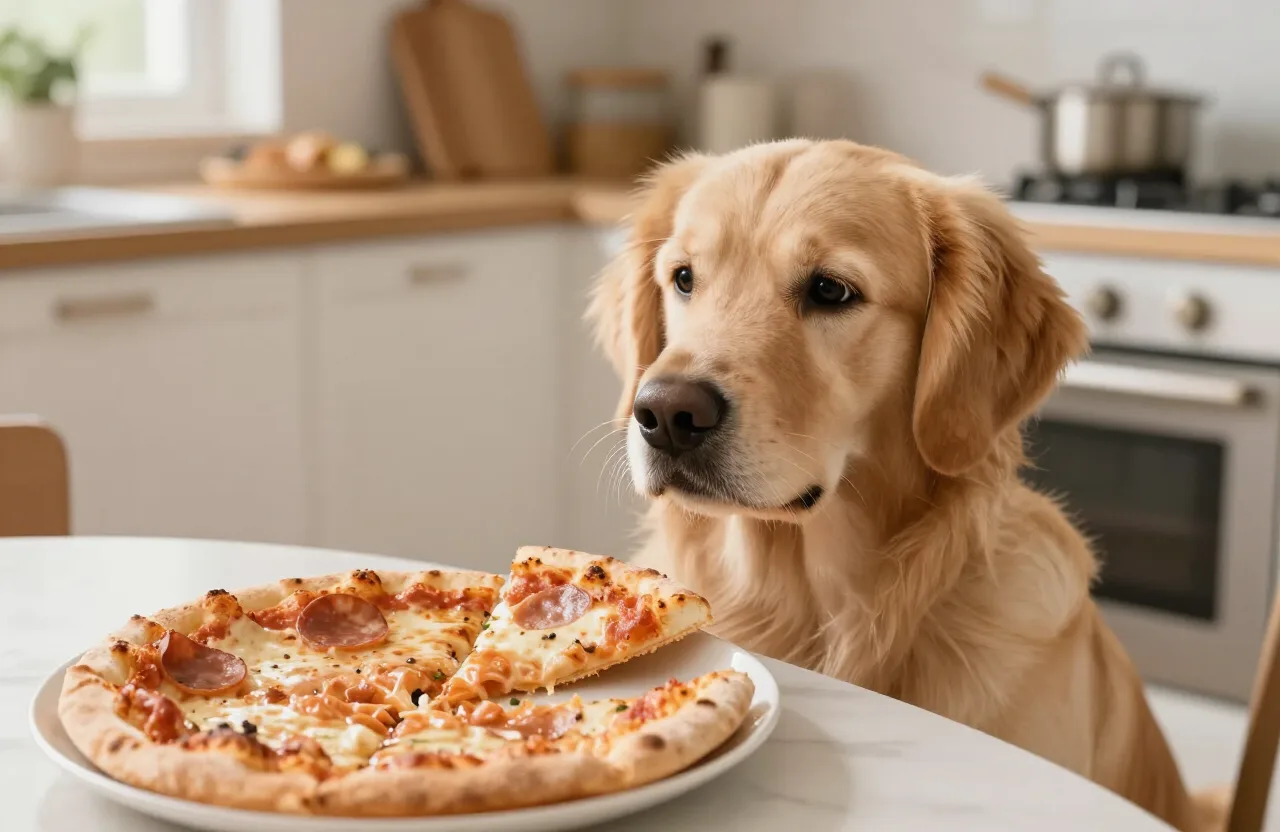
Is pizza safe for dogs?
A tiny bite of plain crust likely won't harm a healthy dog, but pizza is high in fat, salt, and refined carbs that can cause upset stomach, pancreatitis, or long-term weight problems. It should never be a regular treat.
Dangerous pizza toppings for dogs
Garlic and onions are toxic to dogs and damage red blood cells. Xylitol (in some sauces) is deadly even in small amounts. High-fat meats like pepperoni and sausage can trigger pancreatitis.
- Garlic and onion — toxic, avoid entirely
- Xylitol — deadly, check sauces
- Pepperoni and sausage — too fatty and salty
- Excess cheese — hard for many dogs to digest
What to do if your dog ate pizza
A small amount of plain pizza usually just needs monitoring. If your dog ate garlic, onion, xylitol, or a large quantity, or shows vomiting, lethargy, or diarrhea, call your vet or an animal poison control line right away.
The short answer, and the important caveats
A tiny bite of plain pizza crust is unlikely to harm a healthy dog, but pizza is not a good food for dogs and should never be a regular treat. The problem isn't one ingredient but the combination: rich cheese, salty processed meats, and a dough loaded with fat and sodium add up to something dogs' bodies aren't built to handle. When in doubt, don't share.
Ingredients that are genuinely dangerous
Some common pizza toppings are toxic to dogs, not just unhealthy. Onions and garlic - staples of pizza sauce and many toppings - damage a dog's red blood cells and can cause anemia even in modest amounts. High salt and fat can trigger digestive upset or pancreatitis. Raw yeast dough is especially dangerous, as it can expand and ferment in the stomach.
- Onions and garlic: toxic, can cause anemia - present in most sauces.
- Excess salt and fat: risk of upset stomach and pancreatitis.
- Raw pizza dough: can expand and produce alcohol in the stomach.
- Rich cheeses and processed meats: hard to digest, high in sodium.
What to do if your dog eats pizza
If your dog snags a small piece of plain, cooked crust, watch for vomiting or diarrhea but don't panic. If they ate pizza with onions or garlic, a large amount of any pizza, or raw dough, contact your veterinarian or an animal poison-control line promptly. Note what and how much they ate so the vet can assess the risk.
Better treats for your dog
If you want to share, skip the pizza and offer dog-safe alternatives: a few plain cooked vegetables like carrots or green beans, a small piece of plain cooked chicken, or a treat formulated for dogs. These satisfy the urge to share without the salt, fat, and toxic aromatics that make pizza a poor choice for pets.
Can dogs eat pizza crust or cheese?
Plain, fully baked pizza crust in a very small amount is generally not toxic, but it's empty calories with a lot of salt and offers a dog no real benefit. A small bite of plain cheese is usually tolerated by dogs that aren't lactose sensitive, but the rich, salty cheeses on pizza can cause stomach upset. Neither should become a habit, and both are far from ideal treats.
Talking to your vet about your dog's diet
Every dog is different, and factors like size, age, allergies, and conditions such as pancreatitis change what's safe. Your veterinarian is the best source of advice on treats and human foods, and they can tell you how to respond if your dog eats something questionable. When in doubt about any food - pizza included - a quick call to your vet is always the safest move.
The bottom line for pizza and dogs
Pizza is not a good food for dogs. A tiny bite of plain cooked crust is unlikely to cause harm, but the salt, fat, cheese, and especially the onions and garlic in most pizzas make it a poor and sometimes dangerous choice. Never give a dog raw dough, and skip toppings entirely. If you want to treat your dog, reach for dog-safe options like plain cooked vegetables or a proper dog treat, and call your vet if your pet eats anything you're unsure about.
Frequently Asked Questions
Can dogs eat pizza?
Plain pizza isn't toxic, but it's high in fat and salt and should not be a regular treat. Several toppings are dangerous.
Can dogs eat pizza crust?
A small piece of plain crust is usually harmless, but it offers no nutrition and adds empty calories and salt.
Which pizza toppings are toxic to dogs?
Garlic, onion, and xylitol are toxic; fatty meats like pepperoni can cause pancreatitis.
What should I do if my dog ate pizza?
Monitor for small amounts; call your vet immediately if it contained garlic, onion, or xylitol, or if your dog shows symptoms.