
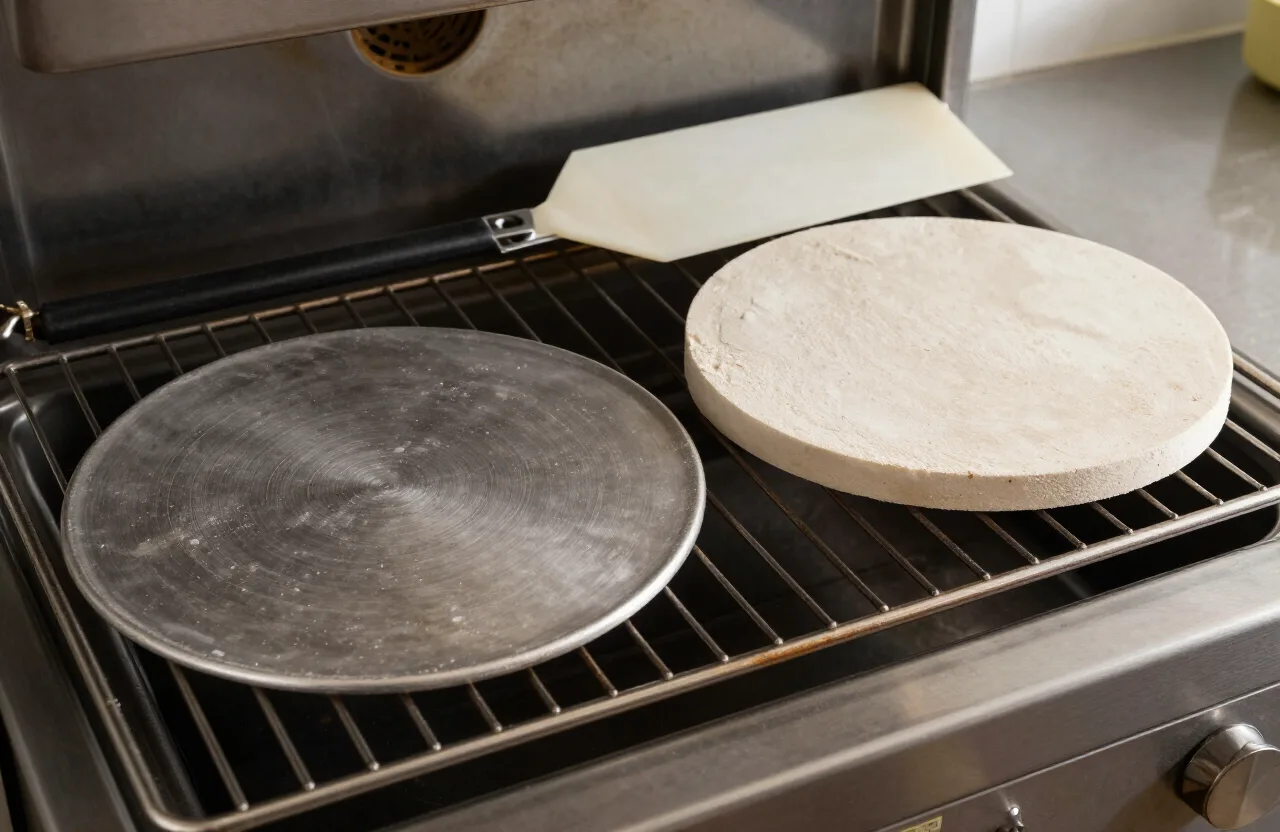
The physics: why steel browns faster
Steel conducts heat roughly 20 times faster than stone, so it dumps energy into the dough the moment the pie lands — crucial in a home oven that can't get hot enough on its own. Stone conducts more gently, which is better when the ambient heat is already extreme.
When to choose stone
In an outdoor pizza oven running 800°F+, a stone won't scorch the base before the top cooks. Stone is also cheaper and doubles nicely for baking bread.
How to clean a pizza stone
Never use soap — stone is porous and will absorb it. Scrape off residue with a metal spatula, wipe with a damp cloth, and burn off stubborn spots by running the oven hot. A steel cleans even easier: scrape, wipe, and re-oil lightly.
The physics: conductivity versus mass
Baking steel and pizza stone both store heat, but steel conducts it into the dough far faster. Steel's high thermal conductivity floods the base with energy the instant the dough lands, producing a crisp, well-browned bottom in a home oven that a stone can't quite match. A stone conducts more gently, which can be an advantage for longer bakes and thicker pies where you don't want the base to scorch before the top is done.
Which one should you buy?
For most home bakers chasing New York or Neapolitan-style results in a 550°F oven, a baking steel is the better single purchase. It preheats faster, recovers heat between pies more quickly, and delivers a crisper base. A stone still shines for artisan bread, thicker pan styles, and cooks who prefer a more forgiving surface that's less prone to scorching.
- Baking steel: crispest base, fast recovery, near-indestructible.
- Pizza stone: gentler heat, great for bread and thick pies, lower cost.
- Both need a full 45-60 minute preheat at your oven's max temperature.
- Place either on an upper rack to get the base closer to the broiler for top browning.
Care, seasoning, and longevity
A baking steel needs a light seasoning of oil to prevent surface rust and should be wiped, not soaked; it will outlast every other tool in your kitchen. A stone should never be shocked with water while hot or it may crack, and it's normal for it to darken and stain with use. Both should preheat gradually with the oven rather than being placed into an already-blazing chamber.
Getting the most from either surface
Positioning matters as much as material. Set the steel or stone on an upper rack, preheat for a full hour at maximum temperature, and switch to the broiler for the final minute to brown the top while the hot surface finishes the base. This 'steel plus broiler' method is the closest a home oven gets to a dedicated pizza oven.
Thickness and weight considerations
A thicker steel or stone stores more heat and recovers faster between pies, but it's heavier and takes longer to preheat. A half-inch steel is a common sweet spot for home ovens, balancing heat capacity against weight and preheat time. Make sure your oven rack and the appliance itself can handle the weight, and always slide the surface in and out with care once it's blazing hot.
Using your steel for more than pizza
A baking steel earns its keep beyond pizza night. It turns out bakery-quality bread with a crisp bottom crust, sears the base of focaccia, reheats leftovers better than any tray, and even helps stabilize oven temperature for roasting. That versatility, plus its near-indestructibility, is why many home cooks consider a steel the better long-term investment despite the higher upfront cost.
The verdict for most home cooks
If you can only buy one surface and your main goal is great pizza in a standard home oven, a baking steel is the stronger choice: it delivers a crisper base, recovers heat faster between pies, and will outlast every other tool in your kitchen. A stone remains an excellent, more affordable option, especially if you also bake a lot of bread or prefer a gentler surface that's less prone to scorching thin crusts. Either way, preheat for a full hour and finish under the broiler for the best results.
Our Tested Picks
Baking Steel (1/4 inch)
Conducts heat fast, near-indestructible, best for home ovens under 550°F.
Cordierite Pizza Stone
Affordable, gentle bake, ideal for very hot ovens and bread.
Prices last verified early 2026 and may change. We may earn a commission from purchases via our partner links.
Frequently Asked Questions
Is a pizza steel better than a stone?
In a home oven under 550°F, yes — steel conducts heat far faster for a crisper, more evenly browned crust. Stone is better in very hot ovens.
How do you clean a pizza stone?
Scrape off residue, wipe with a damp cloth, and burn off stains by running the oven hot. Never use soap.
Can you leave a pizza steel in the oven?
Yes, many people store it on a lower rack, where it also helps stabilize oven temperature.
Which lasts longer, steel or stone?
Steel is nearly indestructible; stones can crack from thermal shock if heated too fast or exposed to moisture.