
Pizza Peel Guide: Wooden vs Metal vs Perforated, and How to Use One
Wood for launching, metal for turning and retrieving. How to choose a pizza peel, what size you need, and the launch technique that stops dough sticking.
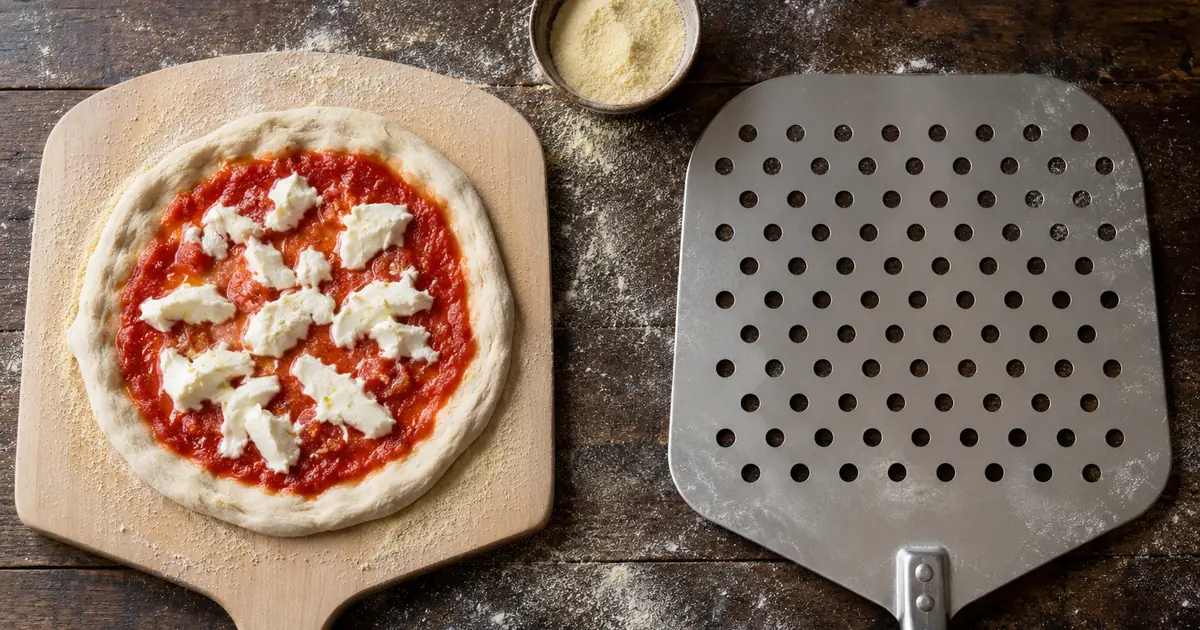
A pizza peel is a flat, paddle-shaped tool for sliding a pizza onto a hot stone or steel and pulling it back out. Wooden peels are best for launching raw dough, because dough sticks to wood less than to metal. Metal peels are thinner, which makes them better for turning and retrieving. Many bakers own both.
What is a pizza peel?
The word comes from the French pelle, meaning shovel, and bakers have used peels to load wood-fired ovens for centuries. At home, a peel does two jobs that a baking sheet can't. It moves a soft, topped dough round onto a surface that is already at full heat, and it lets you reach into a hot oven without reaching in with your arm. If you bake on a pizza steel or stone, a peel is the tool that makes it work.
Wooden pizza peel vs metal pizza peel
The material decides what the peel is good at. Here's how the four common types compare:
| Peel type | Best for | Dough sticking | Blade thickness | Care |
|---|---|---|---|---|
| Wooden pizza peel | Launching raw pizza | Least; the grain holds semolina | Thick, beveled edge | Hand wash, dry upright, oil now and then |
| Solid metal peel | Turning and retrieving | Most when launching | Thin, slides under crusts | Wash and dry |
| Perforated metal peel | Launching and retrieving | Low; holes reduce contact | Thin | Wash and dry |
| Composite (wood fiber) | Launching at home | Low | Medium | Often dishwasher-safe; check the maker |
America's Test Kitchen makes the case for owning two: wood for loading because its porous surface resists sticking, and metal for retrieving because a thin, flexible blade gets under a baked crust easily. If you only buy one, buy the kind that fixes your biggest problem. For most people that's launching, which points to wood or perforated metal.
Perforated pizza peels: are the holes worth it?
A perforated pizza peel is a metal peel with rows of holes or slots cut through the blade. The holes do two things. They cut the contact area between dough and metal, so the dough releases more easily. And when you tap the peel before launching, excess flour and semolina fall through instead of going into the oven, where they would burn on the stone and smoke. Perforated peels cost more than solid ones, and they are the most popular upgrade among people baking often in high-heat ovens.
How to use a pizza peel without the dough sticking
A pizza that sticks to the peel usually slides off half-way and folds onto the stone. These steps prevent it:
- Dust with semolina or cornmeal, not flour. King Arthur Baking's guide to loading pizza explains why: flour is mostly starch and turns sticky when it gets wet, while coarse semolina acts like ball bearings.
- Stretch on the counter, top on the peel. Move the stretched dough to the peel first, then add sauce and toppings quickly. The longer a sauced pizza sits, the more moisture soaks into the base.
- Do the jiggle test. Before you open the oven, give the peel a short shake. If any part of the dough stays put, lift that edge and throw a pinch of semolina underneath.
- Launch in one motion. Set the tip of the peel at the back of the stone, then slide the peel forward slowly and pull it back fast. The dough stays where it landed.
- Use parchment if you're nervous. Build the pizza on a parchment circle and launch the whole thing, then pull the parchment out after two or three minutes once the base has set.
Semolina that falls off the peel ends up on the stone. Our guide to how to clean a pizza stone covers getting it off without damaging the surface.
Turning peels for high-heat pizza ovens
A turning peel is a small round metal peel, usually 7 to 9 inches across, on a long handle. In an outdoor oven running at 750 to 900°F, a Neapolitan pizza bakes in 60 to 90 seconds and has to be rotated every 15 to 20 seconds so the side facing the flame doesn't burn. A turning peel is made for that job: slip it under the edge, lift slightly, spin. If you're choosing an outdoor oven, our guides to pizza ovens and Ooni vs Gozney cover what each one needs.
What size pizza peel do you need?
Choose a blade at least two inches wider than the largest pizza you make, so the edges don't hang off and fold during the launch:
- 10-inch pizza: 12-inch blade
- 12-inch pizza: 14-inch blade
- 14 to 16-inch pizza: 16-inch blade or larger
Then check the oven. The blade has to fit through the oven's mouth, and in a home oven it has to fit between the stone and the door. Handle length matters too: short handles are easier to manage in a kitchen, while long handles keep your hands away from an outdoor oven's flame. Our pizza sizes guide covers how large each size actually is and how many people it feeds.
How to care for a pizza peel
Wooden peels are cutting boards with a handle, and they need the same care. Scrape off dough and semolina, wipe with a damp cloth or a quick hand wash, and dry the peel standing on its edge so air reaches both faces. Never put a wooden peel in the dishwasher or leave it soaking, because it will warp and split. A wipe of food-safe mineral oil every few months keeps the wood from drying out. Don't cut pizza on your launching peel. Knife scores give dough something to grip.
Metal peels just need washing and drying. If one gets greasy, it will start to catch dough, so keep the blade clean.
Once the tools are sorted, the dough does the rest. Start with our pizza dough recipes and size the batch with the dough calculator.
Frequently asked questions
What is a pizza peel used for?
A pizza peel is used to slide an unbaked pizza onto a hot pizza stone, steel or oven floor, and to turn and remove the pizza once it is baking. It lets you bake on a surface that is already at full heat.
Is a wooden or metal pizza peel better?
Wooden peels are better for launching raw pizza because dough sticks to wood less. Metal peels are better for turning and retrieving because the thin blade slides under a baked crust easily. Many home bakers own one of each.
How do you keep pizza from sticking to the peel?
Dust the peel with semolina or cornmeal rather than flour, top the pizza on the peel quickly, and give the peel a short shake before launching to make sure the dough moves freely. Parchment paper is a foolproof backup.
What size pizza peel should I buy?
Choose a blade at least two inches wider than your largest pizza: a 14-inch blade for 12-inch pizzas and a 16-inch blade for 14 to 16-inch pizzas. Make sure it fits through your oven opening.
Are perforated pizza peels worth it?
For frequent bakers, usually yes. The holes reduce sticking and let excess flour fall away before it can burn on the stone. They cost more than solid metal peels.
Can you put a wooden pizza peel in the dishwasher?
No. Heat and long exposure to water warp and crack wood. Wipe it clean or hand wash it quickly, dry it standing on edge, and rub it with food-safe mineral oil occasionally.