
Anchovies on Pizza: Why They Work, and Why Everyone Argues About Them
The most argued-about topping in America is a staple in Italy. What anchovies really taste like, why they vanish into the sauce, and what to pair them with.
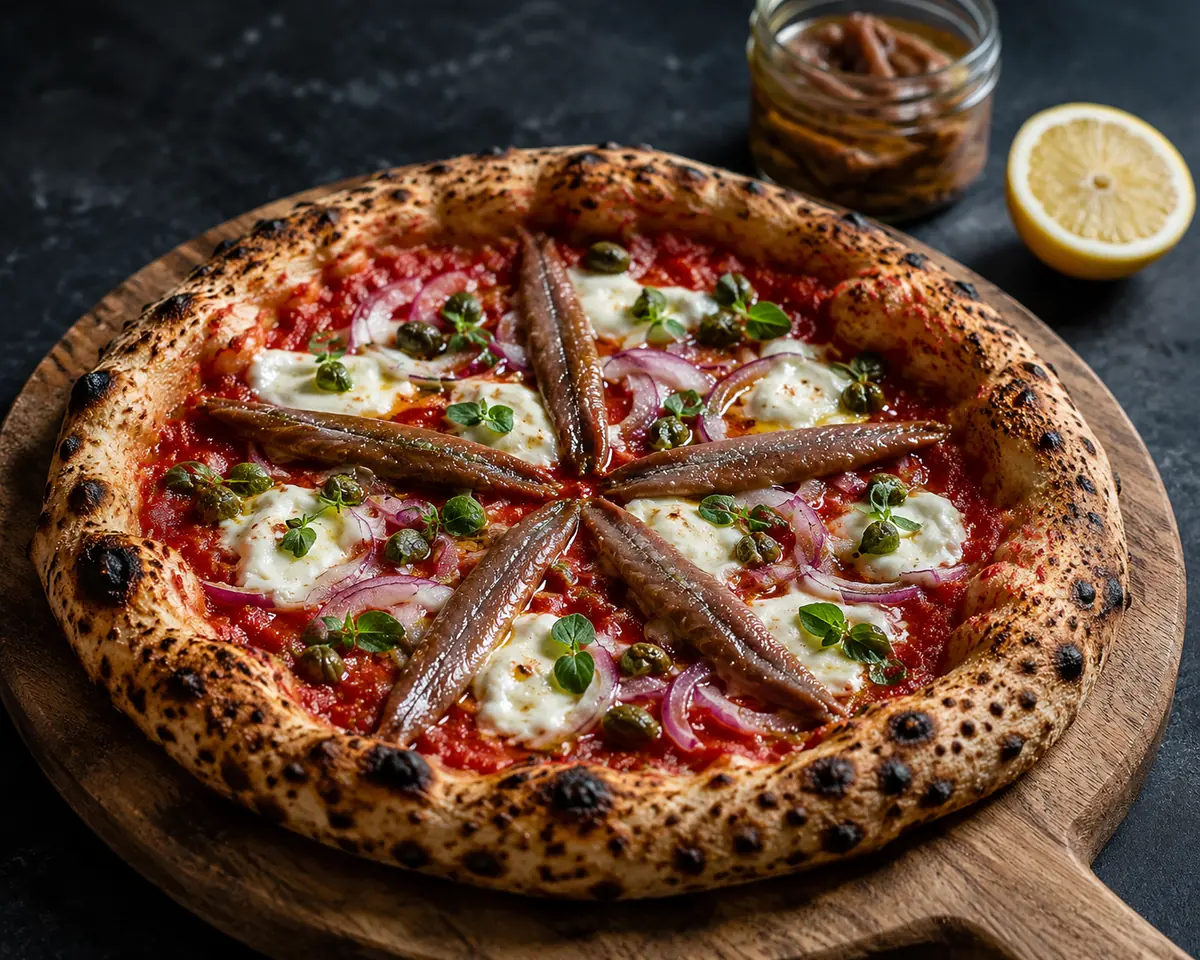
Anchovies on pizza taste salty and savory rather than fishy, because salt-curing breaks down the fish's proteins into glutamates — the same compounds that make parmesan and tomatoes taste deep. Baked on a pizza, a good anchovy fillet largely dissolves into the sauce and cheese, leaving seasoning rather than recognizable fish. This is why anchovies are simultaneously the most-hated pizza topping in American surveys and a standard ingredient in Italy.
What anchovies actually taste like
The reputation comes from bad product and bad handling. A cheap, over-salted anchovy is aggressive and metallic; a properly cured Mediterranean anchovy is soft, faintly sweet, and reads as deep savory salt. Fresh anchovies are packed in salt for months while enzymes break muscle protein into free amino acids, primarily glutamate — the same molecule behind aged parmesan, soy sauce and slow-cooked tomato. What you taste is concentrated umami with a saline edge, not "fish." That is the same savory depth you chase when you reduce a pizza sauce or grate aged cheese over a finished pie.
Why anchovies disappear into a pizza
Anchovy fillets are held together largely by collagen and fat, both of which break down within minutes in a hot oven. A fillet laid on cheese before baking slumps, thins, and merges into the sauce, spreading its salt and glutamate across the slice. Two consequences follow. Whole visible fillets on a finished pizza were added after the bake and taste much sharper. And one or two fillets hidden under the cheese are almost undetectable as fish while making the whole pizza taste more savory — a quiet trick used on many pies that never list anchovy on the menu.
The classic anchovy pizzas
The Pizza Napoletana marinara family — tomato, garlic, oregano, oil, anchovy, no cheese — is one of the oldest pizza formats and still the purest way to taste how anchovy seasons a tomato base. Pizza Romana pairs mozzarella, tomato, anchovy, and oregano. New Haven white clam is not an anchovy pie, but it runs on the same principle: briny seafood with garlic and oil on a charred base. Sfincione — the Sicilian ancestor of American Sicilian pizza — is built on onions, breadcrumbs and anchovy. Pissaladière is the Provençal cousin with slow-cooked onions, anchovy and olives. Every one of these pairs anchovy with something sweet and something pungent, a pattern that runs through much of pizza history.
What to pair with anchovies
The rule is to give the salt something to push against. Onion is the most reliable partner — sweetness balancing salt. Garlic and oregano are the classic aromatic pair. Black olives and capers add more brine without competing for the same flavor lane. Fresh mozzarella and a finishing oil bring richness; for cheese choice details, see our guide to the best cheese for pizza. Chili flakes or hot honey add heat and sweetness. Pairings that fight include pineapple, barbecue sauce, and heavy meat loads — anchovy plus pepperoni plus sausage is a salt collision. For a broader map of what works with what, start from our pizza toppings guide.
How to buy and use anchovies
Salt-packed anchovies are higher quality and need rinsing and filleting; oil-packed fillets in a jar or tin are ready to use and are what most home cooks should buy. Look for firm, intact, deep-rosy fillets rather than pale mush. Origin matters more than price: Cetara on the Amalfi Coast and the Cantabrian Sea in northern Spain are the benchmarks. For sustainability guidance on small pelagic fish, check the Monterey Bay Aquarium Seafood Watch ratings before you stock the pantry.
Amounts for one 12-inch pizza: 2 fillets chopped into the sauce for undetectable seasoning; 5–6 fillets over the cheese for the traditional version; 8–10 for enthusiasts, half before and half after baking. Reduce salt elsewhere when using several fillets — in the dough, the sauce, and any finishing cheese.
Why Americans reject anchovies
Anchovies rank last in American topping surveys. The causes are historical rather than culinary: mid-century American pizzerias used low-grade, heavily salted anchovies served whole and highly visible, so a generation formed its opinion on the worst version of the ingredient. The topping then became cultural shorthand for "gross pizza" in television and film. Meanwhile the same people happily eat Caesar dressing, Worcestershire sauce and puttanesca, all anchovy-based. The ingredient never left American cooking — it only left the pizza menu in plain sight.
Frequently asked questions
Do anchovies on pizza taste fishy?
Not strongly. Salt-curing converts the fish's proteins into glutamates, so baked anchovy reads as deep savory salt rather than as fish. Fillets added after baking taste considerably sharper than those baked under the cheese.
Do you put anchovies on before or after baking?
Before, in the traditional method — the fillets melt into the sauce and season the whole slice. Adding them after baking keeps them intact and gives a much more assertive, distinctly fishy bite.
How many anchovies go on a pizza?
Five or six fillets on a 12-inch pizza is the traditional amount. Two chopped fillets worked into the sauce add savory depth without being identifiable.
What is the best anchovy for pizza?
Oil-packed fillets from Cetara in Italy or the Cantabrian Sea in Spain. Look for firm, deep-rosy, intact fillets in glass rather than pale, mushy ones.
What goes well with anchovies on pizza?
Onion, garlic, oregano, capers, black olives, chili flakes, and fresh mozzarella. Avoid combining anchovies with other heavy salty meats.
Are anchovies healthy?
They are high in omega-3 fatty acids, calcium and protein, and as a small, fast-reproducing fish they carry far less mercury than large predatory species. They are, however, very high in sodium.