
Cheese Pizza: Why Plain Is Hardest, Which Mozzarella, and a Recipe
A cheese pizza has nowhere to hide a mistake. Which mozzarella browns and which turns rubbery, how much cheese and sauce a 12, 14 or 16-inch pie needs, a New York-style recipe, and the calorie math.
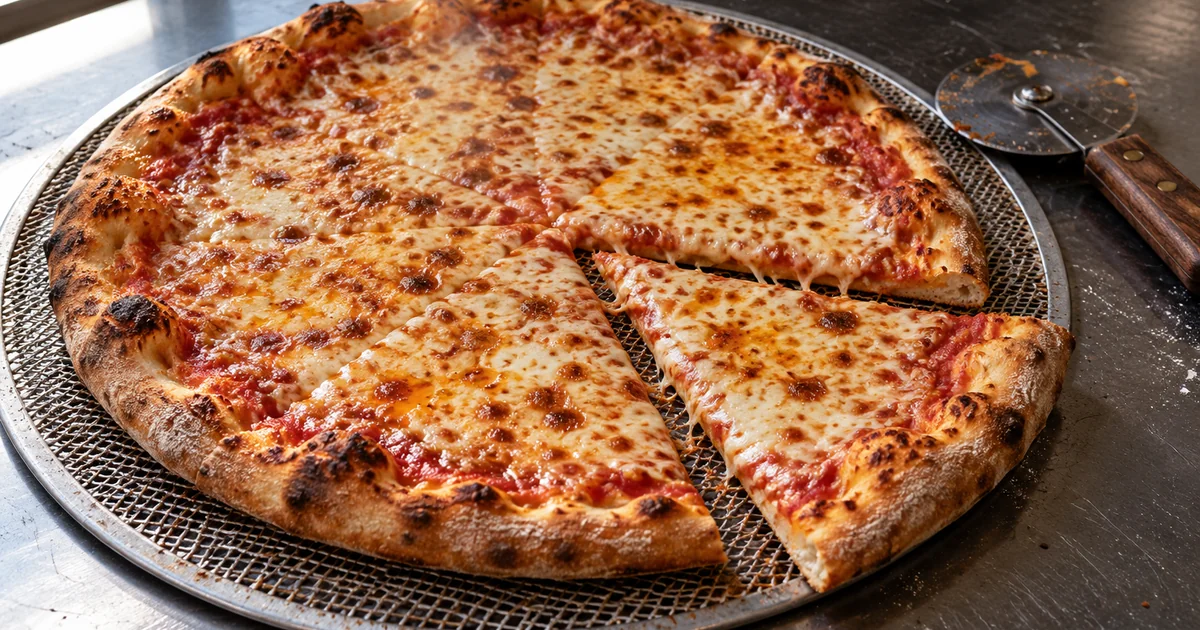
Cheese pizza is dough, tomato sauce and mozzarella, with nothing to hide behind, which is why it is the hardest pizza to make well and the one pizzerias get judged on. The recipe below is a 12-inch New York-style cheese pizza: 280g of dough, 90g of sauce, 170g of low-moisture whole-milk mozzarella, baked on a steel at 500°F for 7 to 9 minutes.
Why plain cheese is the hardest pizza to get right
On a supreme, a soggy middle or a bland sauce goes unnoticed under the sausage and peppers. On a cheese pizza every fault is on the surface. Too much cheese and the slice sweats orange oil; too little and the sauce dries out and tastes like tomato paste. A sauce that is fine under pepperoni is suddenly too sweet or too thin. The crust has to be good because half of each bite is crust.
The trade sees it the same way. Pizza Today calls the cheese slice the benchmark for judging pizzerias, and in 2024 the International Pizza Challenge in Las Vegas added a World's Best Cheese Slice division with rules that allow only dough, traditional red sauce, cheese and spices, no par-baking. That article was published for National Cheese Pizza Day, which falls on September 5 each year.
Three decisions make or break a cheese pizza: which cheese, how much of it, and how hot the oven is.
Which cheese to use on a cheese pizza
Low-moisture mozzarella, and whole milk if you can find it. Materials engineers at the University of Auckland baked pizzas with mozzarella, cheddar, Edam and Gruyere, filmed them, and published the results in the Journal of Food Science in 2014; MPR News has a plain-language summary of the study. Mozzarella won on browning and blistering because it is elastic: water in the cheese turns to steam, the stretchy protein lets the bubbles grow large, oil slides off the top of each bubble and the exposed cheese browns. Cheddar barely bubbles, though it bakes to an even gold. Gruyere bubbles but barely browns, because its extra fat keeps the moisture from evaporating.
Whole milk versus part skim matters more than most people think. PMQ, the pizzeria trade magazine, published a comparison of six pizza cheeses that lists a melting distance of 6.4 mm for whole-milk mozzarella against 4.8 mm for part skim, and quoted the warning that part-skim cheese has "very bad post-melt chew," turning tough and rubbery as the slice cools. Part skim is cheaper and holds up on a conveyor oven, which is why so many chains use it, but a whole-milk slice tastes better ten minutes later.
| Cheese | Melt | Browning | Verdict for a cheese pizza |
|---|---|---|---|
| Low-moisture whole-milk mozzarella | Flows, stretches | Spotted brown, big blisters | The one to buy; shred it yourself from a block |
| Low-moisture part-skim mozzarella | Melts, less flow | Even, less blistering | Fine hot, rubbery cold; chain-pizza texture |
| Fresh mozzarella | Soft, watery | Little | For a Margherita, not a cheese pizza; too wet in a thin layer across the whole pie |
| Provolone (mild) | Like whole-milk mozzarella | Good | Blend 20 to 30 percent in for flavor |
| Pecorino or Parmesan | Does not melt | Toasts | A tablespoon or two over the mozzarella, for salt and nuttiness |
| Cheddar | Melts, little stretch | Even gold, no blisters | Oily on its own; 20 percent in a blend at most |
| Pre-shredded bagged mozzarella | Melts slowly | Dull | The starch coating that stops clumping also slows the melt; avoid if you can |
Our best cheese for pizza guide goes deeper on blends and on the brands sold in supermarkets.
How much cheese and sauce
For a 12-inch pie, 170g of mozzarella is right: enough to cover edge to edge with no bald patches, not so much that it pools. Most home cooks use double that and wonder why the slice drips. Sauce is 80 to 90g, spread thin enough that you can see the dough through it in places. The ratio by weight is roughly two parts cheese to one part sauce, and it scales.
| Pizza size | Dough | Sauce | Mozzarella | Pecorino |
|---|---|---|---|---|
| 10 inch (personal) | 200g | 60g | 120g | 10g |
| 12 inch | 280g | 90g | 170g | 15g |
| 14 inch | 380g | 120g | 230g | 20g |
| 16 inch (New York large) | 500g | 150g | 300g | 25g |
Those dough weights give a thin New York-style crust; see pizza sizes for how many slices each feeds. A thicker pan or Sicilian pie takes more of everything.
Cheese pizza recipe
One 12-inch New York-style cheese pizza. Prep 15 minutes if the dough is made, bake 7 to 9 minutes.
- 280g dough ball at room temperature, from our pizza dough recipes (the New York dough)
- 90g pizza sauce: crushed tomatoes, a pinch of salt and dried oregano, a few drops of olive oil, uncooked
- 170g low-moisture whole-milk mozzarella, shredded from a block on the large holes
- 15g pecorino romano, finely grated
- Semolina or flour for the peel; olive oil to finish
- Put a pizza steel or stone on an upper-middle rack and heat the oven to 500 to 550°F for 45 minutes. A steel browns the base faster; pizza steel vs stone explains why.
- Stretch the dough to 12 inches on a semolina-dusted peel or a sheet of parchment, keeping the rim slightly thicker than the middle.
- Spread the sauce thinly to half an inch from the edge, using the back of a ladle in circles.
- Scatter the mozzarella evenly over the sauce, right to where the sauce stops. Dust the pecorino over the mozzarella.
- Launch onto the steel. Bake 7 to 9 minutes, until the cheese is spotted brown and the rim is blistered. If the top is pale when the base is done, 30 to 60 seconds under the broiler finishes it.
- Rest 2 minutes on a rack before cutting so the cheese sets and the base stays crisp. A thread of olive oil over the top is optional.
The mistakes that ruin a cheese pizza
Too much cheese is the big one. Whole-milk mozzarella is roughly a fifth fat by weight, so a 340g pile carries about 70g of it, and as the cheese melts a good share of that fat has nowhere to go except into a puddle on top. Halve the cheese and the puddle disappears.
A cool oven is next. At 425°F the cheese melts and browns in patches before the base is done, so the pizza sits long enough for the mozzarella to break and go oily. At 500°F and above on a preheated steel the base and the top finish together, in under 9 minutes, and the cheese is still intact when it comes out.
Wet sauce gives a slice that folds and then flops. Crushed tomatoes drained in a sieve for ten minutes before seasoning are thick enough.
Cutting straight out of the oven slides the cheese off the slice. Two minutes on a rack sets it.
And pre-shredded cheese: the cellulose or potato starch that keeps the shreds separate in the bag sits on the surface and dulls the melt. A block costs the same and shreds in a minute.
Cheese pizza calories
A slice of cheese pizza runs 200 to 290 calories depending on style and size, which makes it the lightest common order; pepperoni or sausage adds 40 to 80 per slice and a deep-dish slice climbs toward 400 and beyond. The full breakdown by style, brand and topping is on our pizza calories page. The 170g of mozzarella in the recipe above is around 500 calories across the whole pie and the dough another 650 or so, so a 12-inch pizza cut into 8 comes out near 160 to 180 a slice, below the pizzeria range because the slices are smaller.
Store-bought and frozen cheese pizza
A plain frozen cheese pizza is the easiest to improve, because it is mostly a blank. Add 50g of shredded whole-milk mozzarella and a dusting of pecorino before it goes in, bake it directly on a preheated steel or rack instead of a pan, and most brands come out closer to a pizzeria slice than the box suggests. Our best frozen pizza ranking includes the cheese versions of each brand.
From a pizzeria, the plain cheese slice is the test. If the sauce is bright, the cheese is browned in spots rather than one flat sheet, and the tip of the slice holds when you lift it, the rest of the menu is probably fine. A New York slice is the standard this post has in mind, but a cracker-thin tavern-style cheese pizza is its own thing and worth knowing.
Frequently asked questions
What cheese is used on a cheese pizza?
Low-moisture mozzarella, whole milk by preference, sometimes blended with a little provolone and finished with grated pecorino or Parmesan. Fresh mozzarella belongs on a Margherita, not a cheese pizza, because it releases too much water spread across a whole pie.
How much cheese goes on a 12-inch pizza?
About 170g, or 6 ounces, of shredded low-moisture mozzarella, with 80 to 90g of sauce under it. That covers the pie edge to edge without pooling oil. A 14-inch pizza takes about 230g and a 16-inch New York pie about 300g.
Why is my cheese pizza greasy?
Too much cheese, part-skim cheese that breaks, or an oven that is too cool so the mozzarella sits melted for too long. Use 170g on a 12-inch pie, whole-milk mozzarella, and bake at 500°F or hotter on a preheated steel or stone for 7 to 9 minutes.
How many calories are in a slice of cheese pizza?
Between 200 and 290 calories for a typical pizzeria slice, depending on the style and the size of the pie. A 12-inch homemade pizza made with 280g of dough and 170g of mozzarella, cut into 8, works out to roughly 160 to 180 calories a slice.
What temperature do you bake a cheese pizza at?
As hot as a home oven goes, 500 to 550°F, on a steel or stone preheated for 45 minutes. Bake 7 to 9 minutes until the cheese is spotted brown. At 425°F the cheese overcooks before the base is done.
When is National Cheese Pizza Day?
September 5, every year. It is one of several pizza observances on the calendar, alongside National Pizza Day on February 9 and National Pepperoni Pizza Day on September 20, and pizzerias often run a plain-slice deal for it.