
How to Clean a Pizza Stone (and the Mistakes That Crack It)
Scrape, wipe, and leave the stains alone. How to clean a pizza stone after every bake, how to deep clean it, and the three habits that crack stones.
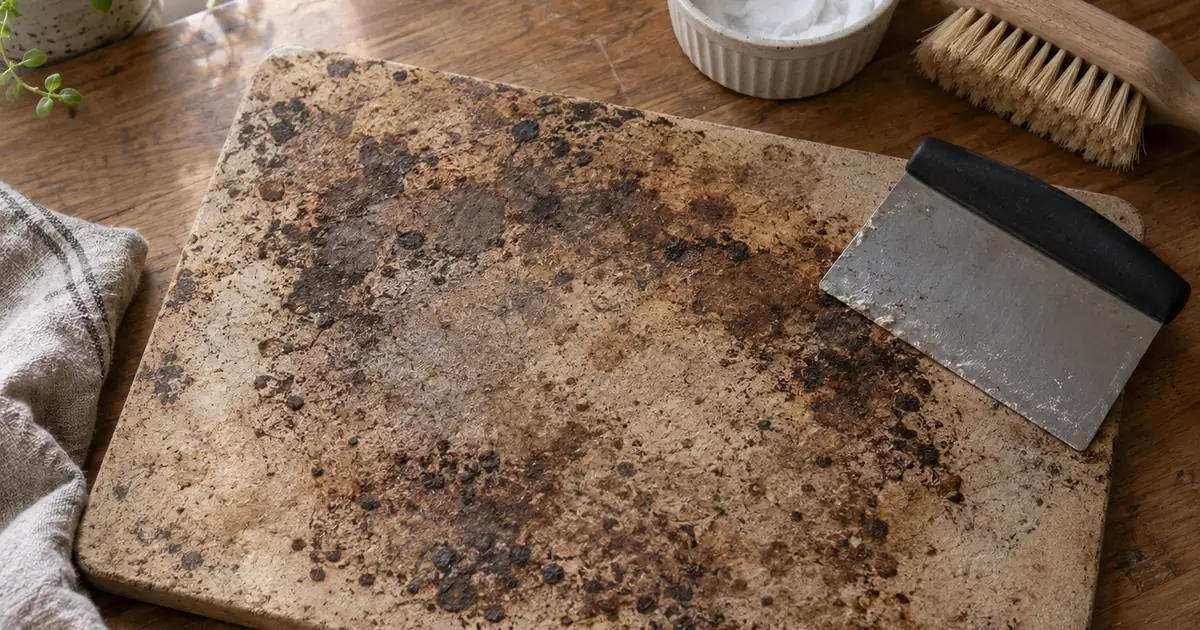
To clean a pizza stone, let it cool completely, scrape off stuck food with a scraper, then wipe it with a cloth dampened in plain hot water. Skip the soap, because an unglazed stone is porous and soaks it up. Use a baking soda paste for stubborn spots. Dark stains are normal and can stay.
How to clean a pizza stone after every bake
Most of the time, cleaning a pizza stone takes about two minutes and needs no products at all. The routine:
- Let it cool in the oven. Never move a hot stone to a cold counter or run water over it. The sudden temperature change is the most common way stones crack.
- Scrape. Use a bench scraper held almost flat, a plastic pan scraper, or a wooden spatula to lift burnt cheese and stuck semolina. Avoid knives and pointed metal tools, which gouge the surface.
- Brush. A stiff dry brush clears loose crumbs and burnt flour from the pores.
- Wipe with water only. A cloth wrung out in hot water is enough. Don't soak the stone or hold it under the tap.
- Dry fully. Leave it on a rack for several hours, or return it to the oven. A stone that goes into a hot oven still damp can crack as the trapped water turns to steam.
How to deep clean a pizza stone
When scraping won't shift baked-on cheese or sugary sauce, use a baking soda paste. Pampered Chef's stoneware care guide suggests half a cup of baking soda mixed with 3 tablespoons of water, spread over the stone and left for 10 to 15 minutes, then scraped and rinsed. Baking soda is mildly abrasive and rinses out cleanly, so it doesn't leave a flavor behind the way soap does.
For greasy buildup, many bakers use heat instead: put the stone in a cold oven, heat it to the oven's maximum, and hold it there for an hour. Grease and food residue carbonize and can be brushed away once the stone cools. Expect some smoke, so run the extractor fan. Don't do this during a self-cleaning cycle. Those run far hotter than a normal bake, and Pampered Chef notes that oven cleaning cycles can cause its stones to flake.
Can you use soap on a pizza stone?
Not on an unglazed stone. Cordierite, clay, and unglazed stoneware are full of tiny pores, which is exactly why they pull moisture out of dough and crisp the base. Those same pores absorb dish soap and release it into the next pizza as a soapy taste. They also soak up water, which is why soaking is out too.
Glazed ceramic stones are different. The glaze seals the surface, and some are sold as dishwasher-safe. Emile Henry's glazed pizza stone is one example. If your stone has a shiny, smooth, sealed surface, follow the maker's instructions rather than the rules for bare stone.
| Surface | Dish soap? | Dishwasher? | Soaking? | Best cleaning method |
|---|---|---|---|---|
| Unglazed cordierite | No | No | No | Scrape, dry brush, water wipe; baking soda paste for stuck spots |
| Unglazed clay or stoneware | No | Only if the maker says so | No | Scrape and water wipe; baking soda paste |
| Glazed ceramic | Yes | Often (check the maker) | Briefly | Wash like any glazed dish |
| Pizza steel | A little, then dry | No | No | Scrape, wash, dry, and wipe with a thin coat of oil |
If you're still deciding between the two surfaces, our pizza steel vs stone comparison covers heat transfer, bake times and upkeep side by side.
Pizza stone stains: why the black spots are fine
A pizza stone starts pale and turns mottled brown and black within a few months. That's seasoning: oil and food residue carbonized into the surface. It doesn't affect flavor or safety, and on unglazed stoneware it gradually builds a more nonstick surface. Trying to scrub a stone back to its original color wears the surface down without gaining anything.
The exceptions are thick raised crusts of burnt cheese, which you should scrape off because they cause hot spots and smoke, and any stain that smells rancid. A rancid smell means oil has soaked into the stone. A long burn-off at maximum heat usually clears it.
How to use a pizza stone so it stays clean and doesn't crack
Most cleaning problems start with how the stone is used. Four habits prevent nearly all of them:
- Preheat it with the oven, not after. Put the stone in a cold oven and heat both together for 45 to 60 minutes. Placing a cold stone into a hot oven is the classic crack.
- Launch with semolina, not heaps of flour. Excess flour scorches on the stone and smokes. A light dusting of semolina or cornmeal slides better and leaves less behind. Parchment works too: launch on it and pull it out after the first few minutes.
- Don't oil an unglazed stone. Oil turns gummy and goes rancid in the pores. Seasoning comes on its own.
- Control the drips. Loaded pies drip the most. The advice in our supreme pizza guide about pre-cooking wet toppings keeps the stone cleaner too.
A stone is also the best way to reheat pizza: slices go onto the hot stone directly and the base re-crisps without drying the top.
Pizza stone for the grill: how to use one safely
A pizza stone for the grill follows the same rules with a bigger risk of thermal shock, because grill burners heat one spot hard. Put the stone on the grates before lighting and let it heat with the grill. Where you can, use indirect heat: burners on at the sides and off under the stone, lid closed. Some grill stones come with a metal frame or handles, which makes the stone easier to move when it's hot, but don't lift one until it has cooled. For high-heat outdoor baking, a dedicated oven is easier. Our guide to pizza ovens and the Ooni vs Gozney comparison cover those.
When to replace a pizza stone
Hairline surface crazing is common and usually harmless. Replace the stone if a crack runs all the way through, if pieces break off, or if it keeps smelling of old oil after a burn-off. A cracked stone can split apart in the oven, and a large one weighs several pounds.
A clean, well-seasoned stone is only half the result. The dough matters as much. Start with our pizza dough recipes and scale a batch to the size of your stone with the dough calculator.
Frequently asked questions
How do you clean a pizza stone?
Let it cool completely, scrape off stuck food with a scraper, brush away loose crumbs, and wipe it with a cloth dampened in hot water. Dry it fully before the next use. Use a baking soda paste for stubborn spots.
Can you wash a pizza stone with soap?
Not if it is unglazed. Cordierite, clay and stoneware are porous and absorb soap, which comes back out as a soapy taste in the next pizza. Glazed ceramic stones can be washed with soap, and some are dishwasher-safe.
How do you get black stains off a pizza stone?
You don't need to. Dark stains are carbonized oil and food, called seasoning, and they do not affect taste or safety. Scrape off raised crusts of burnt cheese, but leave flat stains alone.
Can you soak a pizza stone in water?
No. An unglazed stone absorbs water, and a stone that goes into a hot oven still damp can crack as the trapped water turns to steam. Wipe it instead of soaking it.
Why did my pizza stone crack?
Almost always because of a sudden temperature change: a cold stone put into a hot oven, a hot stone put on a cold surface, or a damp stone heated quickly. Heat the stone up with the oven and let it cool down in the oven.
Can you put a pizza stone on the grill?
Yes. Put it on the grates before lighting so it heats up with the grill, use indirect heat where possible, and keep the lid closed. Don't move it until it has cooled.