
Veggie Pizza: Toppings That Stay Crisp, a Recipe, and the Cold Crescent Roll Version
Vegetables are mostly water, which is why most veggie pizzas come out wet. Which toppings to cook first, how much to use, a 12-inch recipe, and the cold crescent roll veggie pizza from the potluck table.
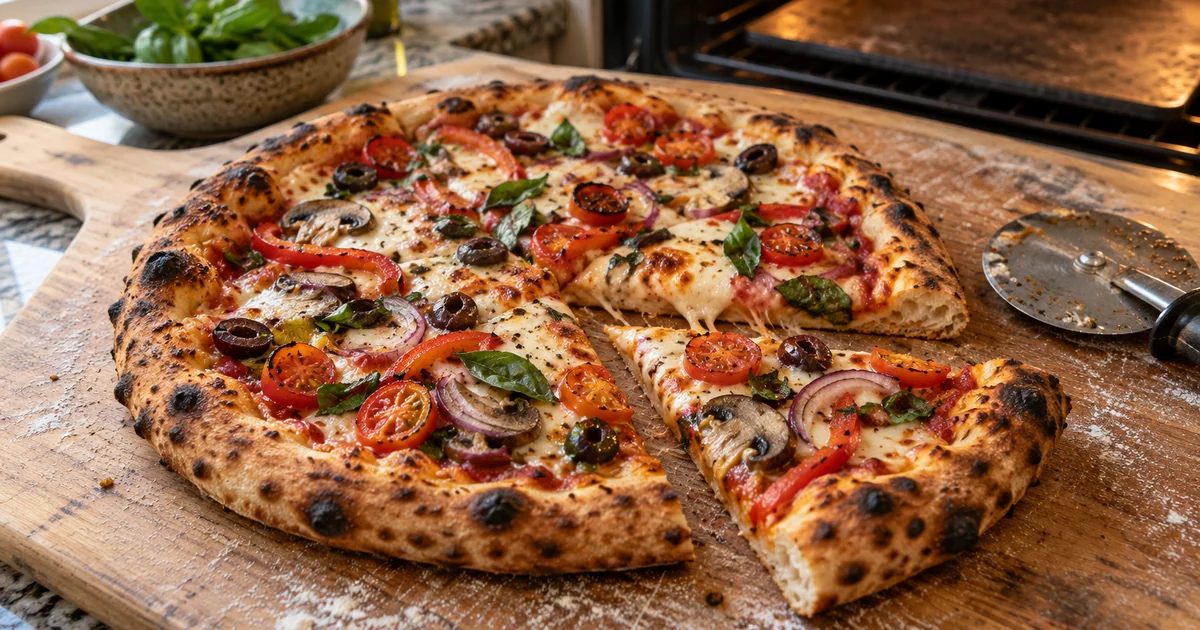
A veggie pizza is a regular cheese pizza with vegetables in place of meat, and the only hard part is keeping it from turning wet. Mushrooms, peppers, onions and zucchini are mostly water, and raw on a pizza they release it onto the cheese. Cook them first, use fewer than you think, and a veggie pizza bakes as crisp as a pepperoni one.
Veggie pizza toppings, and what to do to each one
The vegetables that work on pizza are the ones that lose their water before the oven or hold it inside a skin. Everything else needs a few minutes in a pan or under the broiler first. For a 12-inch pizza, stop at 150 to 200g of vegetables total, about a cup and a half after cooking. More than that and the middle never sets.
| Vegetable | Before it goes on | Why | Per 12-inch pizza |
|---|---|---|---|
| Mushrooms | Slice 1/4 inch, brown in a dry pan 5 minutes | Raw slices shrink by half and leave a puddle | 80g raw (about 40g cooked) |
| Bell pepper | Thin strips, raw, or roast 10 minutes at 425°F | Thin strips blister in the oven; chunks stay crunchy and wet | Half a pepper |
| Red onion | Slice paper thin, raw | Thin rings char at the edges and sweeten | A quarter onion |
| Zucchini | Slice thin, salt 15 minutes, pat dry | Salt pulls water out before the oven does | Half a small zucchini |
| Spinach | Wilt in a pan, squeeze hard | A bag of raw spinach is a cup of water | 50g after squeezing |
| Tomato | Cherry tomatoes halved, cut side up; slicing tomatoes seeded | The seeds and jelly are the wet part | 6 to 8 cherry tomatoes |
| Broccoli | Small florets, blanched 1 minute or roasted | Raw florets dry to dust at 500°F | 60g |
| Artichoke hearts, roasted peppers, olives | Drain, pat dry, quarter | Jarred brine is the problem, not the vegetable | 60g combined |
| Arugula, basil, fresh herbs | Nothing; add after the bake | They burn in under a minute | A handful |
The pairing rules for everything on the pie, including the order things go on, are on our pizza toppings page. The short version for vegetables: a sliced topping under the cheese stays soft, on top of it browns.
How to keep a veggie pizza from getting soggy
Roasting is the fix that covers the most vegetables at once. The University of New Hampshire Extension's method is the one to copy: 425°F, one tablespoon of oil per four cups of cut vegetables, a single layer on the pan, stirred every 10 minutes. Half an hour is their time for a full tray of chunky vegetables; thin pizza slices are done and browned at the edges in 10 to 12. Roast a tray on Sunday and the pizza on Wednesday takes 15 minutes.
Pizzeria operators have a trick for the vegetables they do not pre-cook. Writing in Pizza Today, Jeffrey Freehof suggested spreading a couple of tablespoons of coarse panko over the sauce before the cheese goes on. The crumbs soak up what the vegetables release and disappear into the melted cheese. It works at home, and nobody can taste it.
Heat finishes the job. A pizza on a steel or stone preheated for 45 minutes at 500 to 550°F sets the bottom before the toppings can soak it; a pizza on a cold sheet pan at 400°F does not. If you bake vegetable pizzas often, the pizza steel vs stone comparison is worth ten minutes.
Less cheese than you'd use on a pepperoni pie. Vegetables already weigh the dough down, and a thick blanket of mozzarella traps steam underneath. 120 to 140g on a 12-inch is plenty; our best cheese for pizza guide covers which low-moisture mozzarella to buy and why fresh mozzarella makes the problem worse.
Veggie pizza recipe
One 12-inch pizza with roasted peppers, browned mushrooms, red onion, cherry tomatoes and olives. About 35 minutes, 15 of them waiting on the oven.
- 280g dough ball at room temperature, from our pizza dough recipes or the supermarket
- 90g (1/3 cup) pizza sauce: crushed tomatoes, salt, a pinch of oregano
- 2 tablespoons coarse panko breadcrumbs
- 130g low-moisture whole-milk mozzarella, shredded, plus 15g grated pecorino or Parmesan
- 80g cremini mushrooms, sliced and browned in a dry skillet
- Half a red bell pepper, cut in thin strips
- A quarter red onion, sliced as thin as you can
- 6 cherry tomatoes, halved
- 8 kalamata olives, halved
- 1 clove garlic, sliced thin, 1 teaspoon olive oil, a pinch of chili flakes
- Fresh basil or arugula to finish
- Put a steel or stone on an upper-middle rack and heat the oven to its highest setting, 500 to 550°F, for 45 minutes.
- Cook the mushrooms in a dry skillet over medium-high heat until browned and the liquid has cooked off, about 5 minutes. Toss the pepper strips and onion with the teaspoon of oil.
- Stretch the dough to 12 inches on a floured peel or a sheet of parchment.
- Spread the sauce thin, leaving a half-inch rim. Scatter the panko over the sauce, then the mozzarella, then the pecorino.
- Arrange the mushrooms, peppers, onion, tomatoes (cut side up), olives and garlic. Leave gaps; you should still see cheese.
- Launch onto the steel and bake 7 to 9 minutes, until the rim is blistered and the pepper edges are charred. On a sheet pan at 500°F, give it 12 to 14 minutes on the bottom rack.
- Rest 2 minutes, add chili flakes and torn basil, and cut.
Veggie pizza combinations that work
Roasted pepper, onion and olive, as above. Mushroom, spinach and garlic on a white base. Thin zucchini, corn and a squeeze of lemon in summer. Broccoli with pecorino and lots of black pepper. Everything from the table at once is a supreme pizza without the meat, and it needs the full panko trick.
For a dairy-free version, the sauce, panko and every vegetable here are already vegan; the cheese swaps are in our vegan pizza guide.
Cold veggie pizza: the crescent roll appetizer
Half the searches for veggie pizza are for a different dish altogether: the cold party appetizer that has sat on potluck tables for 30 years or so, a sheet of crescent roll dough baked, cooled, spread with a cream cheese and ranch (or dill) mixture and covered in raw chopped broccoli, cauliflower, carrot and tomato, cut into squares. Nobody bakes the vegetables. It is a pizza in shape only, and it is still on the table at most Midwestern graduation parties.
pizza.guide is independent and not affiliated with Pillsbury.
Pillsbury's own version, which the company says first ran in its Appetizers cookbook more than 25 years ago, is the one most family recipe cards descend from. Its published recipe bakes two 8-ounce cans of crescent dough at 375°F for 13 to 17 minutes in a rimmed sheet pan, cools the crust completely (about 30 minutes), and spreads it with 8 ounces of cream cheese beaten with half a cup of sour cream, a teaspoon of dried dill and an eighth of a teaspoon of garlic powder. Broccoli florets, quartered cucumber slices, seeded chopped Roma tomato and shredded carrot go on top. Cut 8 by 4, it makes 32 pieces at 90 calories each.
Two of Pillsbury's notes matter more than the ingredient list. Dry the vegetables completely, and serve within 2 hours of assembling, or the crust goes soft. A one-day stay in the fridge is the stated maximum; freezing is out. The ranch-packet version swaps the dill and garlic powder for half an envelope of dry ranch mix and adds a cup of shredded cheddar over the vegetables.
Veggie pizza dip is the same cream cheese and ranch mixture spread in a dish, topped with the chopped vegetables and cheddar, and served with crackers, which skips the crust and the two-hour clock.
If you want a warm appetizer instead, the tortilla and bagel versions on our easy pizza snacks page take the same vegetables.
Storing and reheating a veggie pizza
A baked veggie pizza keeps 3 to 4 days in the fridge, same as any other, but it reheats worse than a cheese pizza because the vegetables keep giving up water. A skillet with a lid, medium heat, 4 to 5 minutes, re-crisps the bottom and warms the top; the microwave turns it to a sponge. Our how to reheat pizza guide has the oven and air fryer timings. The cold crescent pizza does not reheat at all; eat it within a day.
Frequently asked questions
What vegetables go on a veggie pizza?
Mushrooms, bell peppers, red onion, cherry tomatoes, olives, spinach, zucchini, broccoli, artichoke hearts and roasted garlic are the usual set. Brown the mushrooms, wilt and squeeze the spinach, salt the zucchini and drain anything from a jar before it goes on, and keep the total to about 150 to 200g per 12-inch pizza.
How do you keep veggie pizza from getting soggy?
Cook watery vegetables first, roasting them at 425°F or browning them in a dry skillet, scatter two tablespoons of panko over the sauce before the cheese, use less cheese than on a meat pizza, and bake on a steel or stone preheated at 500°F or higher so the bottom sets fast.
Do you cook vegetables before putting them on pizza?
Mushrooms, spinach, broccoli, eggplant and thick pepper chunks, yes. Thin-sliced onion, thin pepper strips, halved cherry tomatoes and anything from a jar can go on raw as long as they are dry. Leafy herbs and arugula go on after the bake.
What is cold veggie pizza made of?
A baked and cooled sheet of crescent roll dough spread with cream cheese beaten with sour cream or ranch seasoning, then topped with raw chopped broccoli, cauliflower, carrot, tomato and cucumber, sometimes with shredded cheddar. It is served cold, cut into squares, within 2 hours of assembly.
Is veggie pizza healthy?
Healthier than the same pizza with pepperoni, since the vegetables add fiber and little fat, but the crust and cheese still supply most of the calories. A 12-inch veggie pizza made as above cuts into eight slices of roughly 160 calories each, and a 90-calorie square of the cold crescent version is mostly dough and cream cheese.
What cheese is best on veggie pizza?
Low-moisture whole-milk mozzarella, shredded, in a thinner layer than you would use under pepperoni, with a little grated pecorino for salt. Fresh mozzarella adds more water to a pizza that already has plenty. Feta or goat cheese crumbled on after the bake works with spinach and olive toppings.