
Cauliflower Pizza Crust: A Recipe That Holds Together, the Carb Numbers, and the Frozen Ones
Squeeze out a cup of water, bind with egg and hard cheese, and bake it dark before any sauce goes on. A cauliflower pizza crust recipe that holds together, the carb numbers against regular crust, and what the frozen ones are made of.
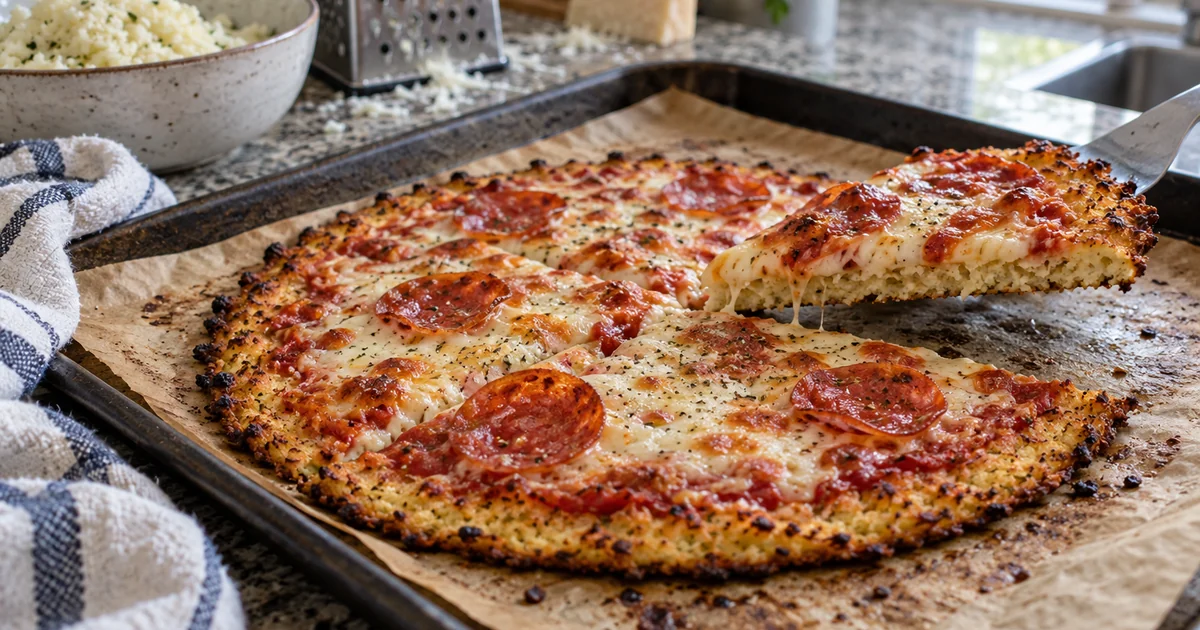
A cauliflower pizza crust is riced cauliflower bound with egg and cheese, pressed thin and baked until it browns, then topped and baked again. Done right it holds a slice; done wrong it is a pancake. The difference is how much water you squeeze out and how long the first bake runs. Whether it is lower in carbs depends on what else went in.
What a cauliflower crust is, and what it isn't
The homemade version is simple: a head of cauliflower, grated or pulsed to the size of rice, cooked, wrung out in a towel, then mixed with an egg and about half a cup of hard cheese and baked as a flat round. There is no flour in it, which is why it became the standard pizza base for people cutting carbs or avoiding gluten over the past 15 years, and why it has a reputation for falling apart.
The store-bought version is usually something else. Consumer Reports looked at three store-bought crusts in 2020 and found that one whole crust ran anywhere from 120 to 600 calories, with 2 to 29 grams of carbs per slice, because the carbs came from rice flour, brown rice flour, tapioca starch, corn starch and sugar rather than from the cauliflower. Their conclusion was that a cauliflower crust can beat a refined white-flour crust, but it all comes down to the other ingredients.
Is cauliflower crust healthy? The numbers
The honest comparison is per crust, since slice sizes vary. The homemade figures below come from a West Virginia University recipe; the frozen ones are from the Consumer Reports review, and formulas change, so check the current box. The regular crust is an estimate for a 12-inch pizza made from a 250g dough ball, which is about 150g of flour.
| Crust (whole) | Made from | Calories | Carbs | Notes |
|---|---|---|---|---|
| Homemade cauliflower (recipe below, 8 slices) | Cauliflower, 1 egg, 1/2 cup cheese | About 400 | About 40g | 50 calories and 5g carbs per slice, 4g protein |
| Regular 12-inch thin crust | Flour, water, salt, yeast, oil | About 590 | About 110g | Estimate; see pizza calories for whole pizzas |
| Caulipower Original (10-inch, 2020 label) | Cauliflower, rice flours, starches, egg | 510 | 87g | Gluten-free and dairy-free, not low-carb |
| Cali'flour Foods Plain (9-inch, 2020 label) | Cauliflower, cheese, egg | 270 | 6g | Closest to homemade; 18g fat |
| Realgood Cauliflower Crust (10-inch, 2020 label) | Cauliflower, mozzarella, Parmesan, coconut flour | 600 | 21g | 1,500mg sodium, 45g fat |
A homemade cauliflower crust cuts the carbs of a thin regular crust by roughly two thirds and the calories by a third, then adds cheese fat and about 180mg of sodium per slice. A crust built on rice flour saves little or nothing on carbs; it is a gluten-free crust with a vegetable in it, which is fine as long as you know it. Our gluten-free pizza guide covers the other options, and the gluten-free pizza crust recipe is the one to use if you want a crust that stretches.
Why cauliflower crust falls apart, and the fix for each cause
Water is the first problem. A medium head of cauliflower is around 700g, and most of that is water. After cooking and cooling, wring the cauliflower in a clean dish towel in two or three batches until you have squeezed out about a cup of liquid and the ball feels like damp sand. The WVU recipe says to squeeze as hard as you can and repeat until little liquid remains, and that is the right instruction.
Too little binder is the second. One egg per medium head, plus 110 to 120g of cheese, is the working ratio. Finely grated Parmesan or pecorino binds better than mozzarella because it carries less water; a half-and-half mix gives you both structure and some pull. Skip the egg and the crust crumbles unless you replace it with a tablespoon of ground flax soaked in three of water, which works but gives a softer result.
The third is pulling the first bake too soon. The crust needs to go dark gold across the whole surface, not just the edge, before any sauce touches it. That is 20 to 25 minutes at 425°F for a crust pressed 1/4 inch thick. Pale means wet. If the center still looks damp at 20 minutes, slide a second sheet of parchment on top, flip the whole thing, peel off the original parchment and give the underside 5 minutes more.
Thickness and shape cause the rest. Press it to an even 1/4 inch, 10 to 11 inches across, with a slightly raised rim; a thick center never dries. Then top it lightly. Two tablespoons of sauce, not a third of a cup, and 80g of cheese, not 150. Wet vegetables go on pre-cooked, as in our veggie pizza guide.
Cauliflower pizza crust recipe
One 10- to 11-inch crust, 8 slices. About 55 minutes, most of it oven time.
- 1 medium head cauliflower (about 700g), or 500g frozen riced cauliflower
- 1 large egg
- 60g (1/2 cup) finely grated Parmesan or pecorino
- 60g (1/2 cup) low-moisture mozzarella, shredded
- 1 teaspoon dried oregano or Italian seasoning
- 1/4 teaspoon garlic powder
- 1/2 teaspoon salt and a few grinds of pepper
- To top: 2 tablespoons pizza sauce, 80g shredded mozzarella, a few slices of pepperoni or roasted vegetables
- Heat the oven to 425°F with a sheet pan or steel inside. Cut a sheet of parchment to fit.
- Cut the cauliflower into florets and pulse in a food processor to rice-sized bits, about 4 cups. Microwave in a covered bowl 5 minutes (or steam 5 minutes), then spread on a plate to cool for 10.
- Pile the cauliflower in a clean dish towel and wring hard over the sink, twice, until about a cup of liquid is out. You should have roughly 350g left.
- Mix with the egg, Parmesan, mozzarella, oregano, garlic powder, salt and pepper until it holds together when pressed.
- Press onto the parchment into a 10- to 11-inch round 1/4 inch thick, with a slightly thicker rim. Smooth the surface so there are no thin spots.
- Slide the parchment onto the hot pan and bake 20 to 25 minutes, until the surface is golden brown all the way across and the edges are darker.
- Cool 5 minutes. Spread the sauce thin, add the cheese and toppings, and bake 8 to 10 minutes more until the cheese browns.
- Rest 3 minutes before cutting. The crust firms as it cools.
Store-bought cauliflower crusts
Caulipower is the one in most freezer aisles. Its Original crust lists cauliflower first, then brown rice flour, rice flour, water, corn starch and tapioca starch, with eggs further down; it is gluten-free and dairy-free, sold two to a box, and the instructions say to bake it from frozen directly on the middle oven rack at 425°F for 12 to 15 minutes once topped. No pan, no thawing. It eats like a thin, crisp gluten-free flatbread, because of the rice flour.
Trader Joe's frozen cauliflower crust is the other one people ask about. Its recipe has leaned on corn flour rather than egg and cheese, which makes it vegan but not a low-carb product; read the current box, since these formulas change. For something closer to the homemade ratio, look for a refrigerated or frozen crust whose first three ingredients are cauliflower, cheese and egg, and expect to pay more for it.
Whatever the box says, frozen cauliflower crusts come out crisper on a preheated steel or stone than on a cold pan, and the air fryer handles a personal-size one in 6 to 8 minutes at 375°F; sizes and times are on the air fryer pizza page.
Toppings, storage and reheating
Because the crust is already half cheese, go lighter on the mozzarella than you would on dough and lean on salty, dry toppings: pepperoni, olives, roasted peppers, a little pecorino. Fresh mozzarella and raw tomato slices are the two that undo all the squeezing. The best cheese for pizza guide explains which low-moisture mozzarella melts best in a short bake.
Par-baked crusts freeze well. Cool them completely, stack with parchment between, wrap and freeze for up to a month; top from frozen and add 3 or 4 minutes to the second bake. Topped leftovers keep 3 days in the fridge and reheat best in a dry skillet over medium heat with a lid, 4 to 5 minutes, which re-crisps the bottom; the oven method in our how to reheat pizza guide works too. The microwave returns it to the pancake state.
Frequently asked questions
Is cauliflower pizza crust healthier than regular crust?
A homemade one is lower in carbs and calories: about 5g carbs and 50 calories per slice against roughly 14g and 75 for a thin regular crust, with more fat and sodium from the cheese. Store-bought crusts built on rice flour and starches can match a regular crust on carbs, so read the label.
Why does my cauliflower pizza crust fall apart?
Too much water left in the cauliflower, not enough binder, or a first bake that stopped while the crust was still pale. Wring the cooked cauliflower until about a cup of liquid is out, use one egg and 120g of cheese per medium head, press it 1/4 inch thick and bake until golden all the way across before topping.
How many carbs are in cauliflower pizza crust?
A homemade crust from one head of cauliflower, an egg and half a cup of cheese has about 40g of carbs in the whole crust, or 5g per slice of eight. Frozen crusts ranged from 2 to 29g per slice in a Consumer Reports review, depending on how much rice flour and starch they contain.
Can you make cauliflower crust without cheese or egg?
Yes, with a weaker result. Replace the egg with a tablespoon of ground flaxseed soaked in three tablespoons of water, and the cheese with 40g of almond flour and 2 tablespoons of nutritional yeast. Squeeze the cauliflower even drier, bake the first round 30 minutes, and eat it with a fork or as a flatbread.
Can you use frozen riced cauliflower for pizza crust?
Yes. Use about 500g, microwave it from frozen for 6 minutes, spread it out to cool, then wring it in a towel. Frozen cauliflower holds more water than fresh, so expect to squeeze out closer to a cup and a half before it feels like damp sand and binds properly.
How do you cook a frozen Caulipower crust?
Caulipower's own instructions say to top the crust frozen, place it directly on the middle oven rack at 425°F with no pan, and bake 12 to 15 minutes until the toppings brown and the crust is crisp. Do not thaw it first. A preheated steel or stone gives a crisper bottom.